Master the Art of the Perfect Homemade Lahmacun with This Simple Method
If you have ever walked through the vibrant streets of Istanbul or the spice-scented markets of Gaziantep, you have likely been lured by the aroma of freshly baked Turkish Lahmacun. Often referred to as “Turkish Pizza” by travelers, this thin, crispy flatbread topped with a savory, spiced meat mixture is far more than a snack—it is a cultural cornerstone. Unlike its Italian cousin, Lahmacun (pronounced lah-mah-june) features a paper-thin crust and no cheese, relying instead on the harmony of finely minced lamb or beef, fresh herbs, and sun-drenched vegetables.
Historically, this dish finds its roots in the Levant and the southeastern regions of Turkey, where the competition between Şanlıurfa and Gaziantep styles remains a friendly culinary rivalry. While Urfa emphasizes a deep, earthy heat from isot (Urfa chili), Gaziantep versions often include more garlic and parsley for a brighter finish. It is a meal traditionally shared with family, often preceded by a warm bowl of Turkish Lentil Soup to open the digestive system and prepare the palate for the spiced journey ahead. Whether you are eating it at a local “pide salonu” or making it in your own kitchen, the magic lies in the extreme thinness of the dough and the quality of the raw meat topping.
The Science of the Perfect Lahmacun: Dough & Meat Chemistry
To achieve a 10/10 result at home, we must understand two technical elements: Hydration and Fat Rendering. Authentic lahmacun dough is a “lean dough,” meaning it has little to no fat, allowing it to become cracker-crispy rather than chewy like bread. When you roll it to a 1-2mm thickness, the high heat of the oven creates an instant “oven spring,” locking in the structure before the meat juices can soak through.
The meat mixture acts as a protective, flavorful barrier. We use a high-fat ratio (20-25%) because as the lahmacun bakes, the fat renders and “fries” the top layer of the dough while the bottom crisps against the hot surface. This creates a dual-texture experience: a snap-crispy base and a succulent, melt-in-your-mouth topping.
Ingredients
For the High-Elasticity Dough:
3 cups All-purpose flour (high protein preferred for better stretching)
1 cup Lukewarm water ( 45 °C)
1 tsp Salt
½ tsp Sugar (essential for the Maillard reaction/browning)
1 tbsp Olive oil (for subtle elasticity)
For the Savory Topping (The “Harc”):
½ lb (250g) Ground beef or lamb (20-25% fat is critical)
1 large Yellow onion, very finely minced (drain excess juice)
2 Cloves of garlic, crushed into a paste
1 Large tomato, finely grated (discard the peel and seeds)
½ Green bell pepper or Anaheim pepper, finely minced
1 Red Kapya or Bell pepper, finely minced (for sweetness and color)
2 tbsp Tomato paste
1 tbsp Pepper paste (biber salçası – use spicy for Urfa style)
¼ cup Fresh parsley, finely chopped (stems removed)
1 tsp Ground cumin
1 tsp Aleppo pepper or Paprika
½ tsp Salt and freshly ground black pepper
Instructions
1. Develop the Gluten for Maximum Thinness
In a large mixing bowl, combine the flour, salt, and sugar. Gradually add the water and oil. Knead the dough for a full 10 minutes. Why? You need strong gluten networks to roll the dough until it’s nearly translucent without it tearing. The dough should feel like soft earlobe consistency—smooth, elastic, and not sticky. Let it rest for at least 45 minutes; this “autolyse” stage allows the gluten to relax, making the rolling process effortless.
2. Engineer the Topping Consistency
While the dough rests, prepare the “harc.” Combine the meat with the finely minced vegetables and pastes. It is vital to mince the vegetables by hand or pulse briefly in a processor; you want tiny chunks, not a puree. If the mixture is too dry, add 1-2 tablespoons of water. The final consistency should be like a soft, spreadable pâté. This moisture balance ensures the meat stays juicy during the 5-minute “blast” in the oven.
3. The Ultra-Thin Rolling Technique
Preheat your oven to its absolute maximum—typically ( 260 °C) —with a pizza stone or an inverted baking sheet inside for at least 30 minutes. Divide the dough into 8 equal balls. On a floured surface, roll each ball into a 10-12 inch circle. It should be so thin you can almost see the counter through it. This mimics the professional Turkish Bread Recipe Without Yeast style where the focus is on a crisp, non-doughy finish.
4. Application and the High-Heat Bake
Spread about 2-3 tablespoons of the topping onto the dough, leaving only a tiny 1/4 inch border. Press the meat down with your fingertips to “marry” it to the dough. Carefully slide it onto the scorching hot stone. Bake for 5–7 minutes. Watch for the “blistering” effect—the edges should char slightly (leopard spotting), and the meat should sizzle in its own fat. The aroma will be a heady mix of toasted grain and roasted peppers.
Expert Tips for Authority Results
Control the Moisture: If your onions and tomatoes are too watery, the dough will become soggy (“kayış gibi”). Always squeeze out the excess juice from the minced onions before adding them to the meat.
The Sizzle Factor: You know it’s done when the meat topping is bubbling and the bottom has dark brown spots. If you use a pizza stone, the bottom will be rigid and “snap” when bent.
The “Limon” Ritual: Never skip the fresh lemon squeeze. The acidity cuts through the richness of the lamb fat, brightening the entire flavor profile.
Pairing like a Local: While water is fine, a cold glass of frothy Ayran is the traditional companion. For a side with a kick, try our Fine Bulgur Salad “Kısır”, which provides a tangy contrast to the warm spices.
Serving & Presentation
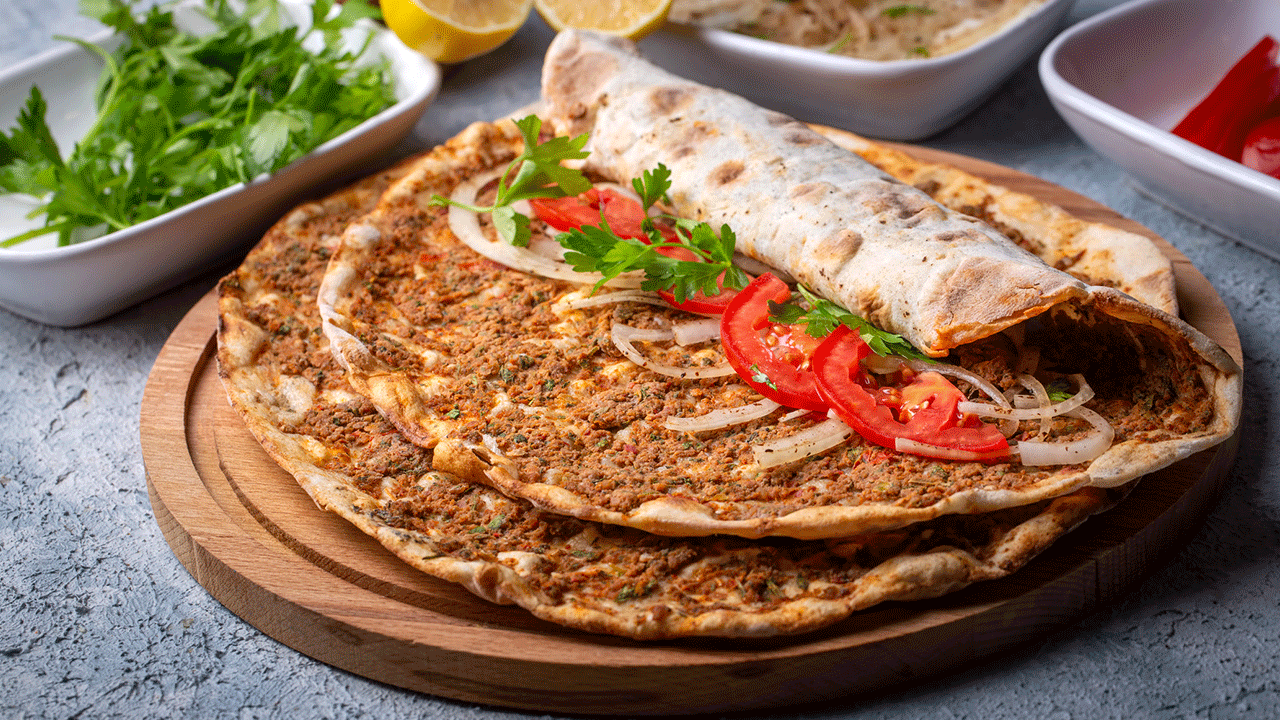
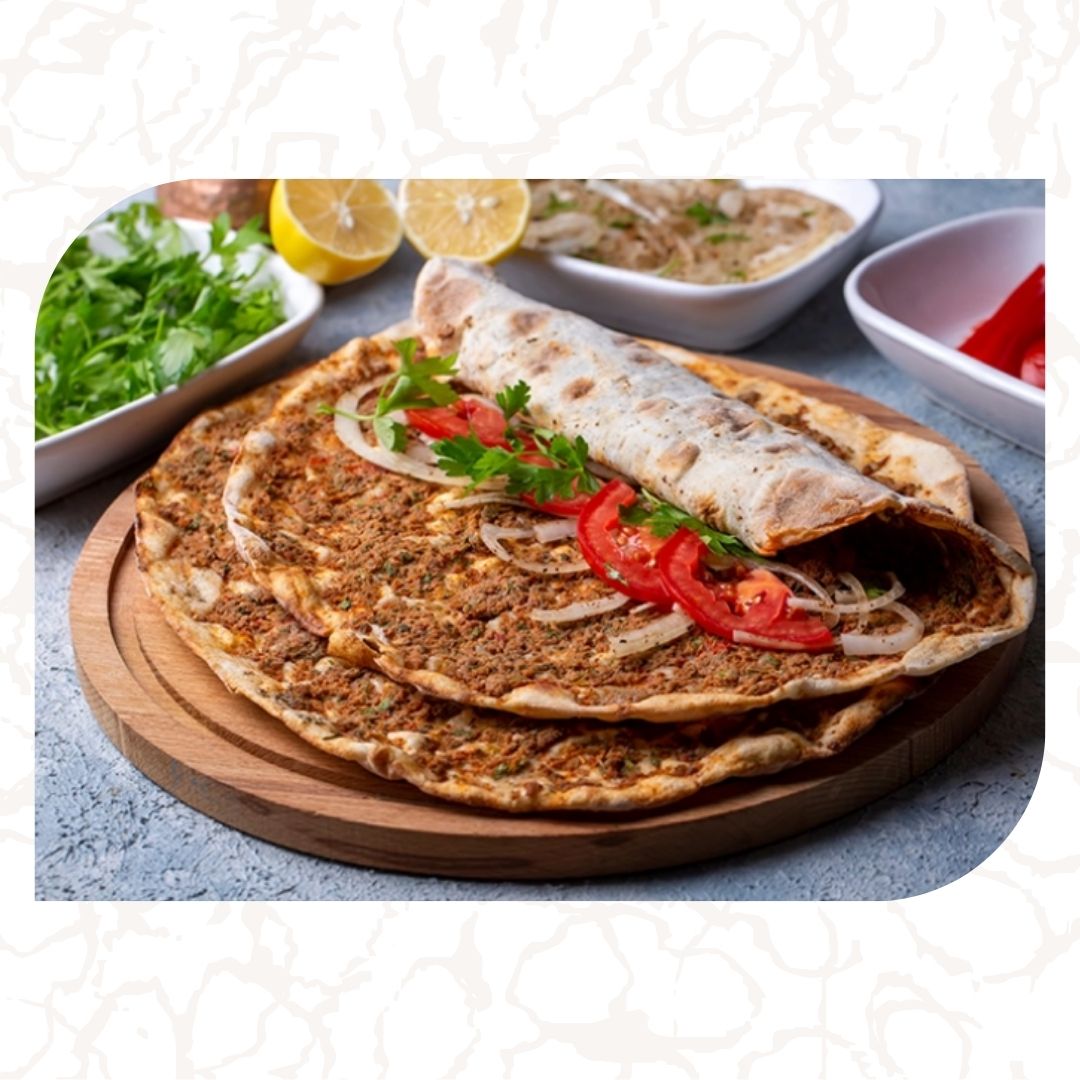
For an authentic Turkish experience, serve the Lahmacun on a large wooden board. In the center of the table, provide a “salad plate” consisting of fresh parsley sprigs, sliced tomatoes, sumac-rubbed red onions, and lemon wedges.
Pro Plating: Place a Lahmacun on a plate, top it with the salad, roll it tightly like a cigar, and cut it diagonally. This “wrap” style is how it’s enjoyed in the busy markets of Istanbul. For those who enjoy a variety of flavors, serving it alongside a Turkish Onion Soup Recipe can turn a simple snack into a multi-layered dinner party.
Storage & Reheating for Crispness
Fridge: 2-3 days. To reheat, avoid the microwave! Use a skillet on medium-high heat for 2 minutes. This “refries” the bottom and restores the crunch.
Freezing: You can freeze the rolled-out dough (with parchment in between) or the finished product. To bake from frozen, place directly into a (200 °C) oven for 8-10 minutes.
FAQ
Can I make this in an Air Fryer?
Yes! Set your air fryer to its highest setting . Cook for 4-5 minutes. Because air fryers have smaller spaces, you may need to make “mini-lahmacuns” (Fındık Lahmacun).
What if I don’t have pepper paste (Biber Salçası)?
You can substitute with an extra tablespoon of tomato paste mixed with a teaspoon of smoked paprika and a pinch of cayenne pepper to mimic the depth.
Can I make the dough gluten-free?
While traditional lahmacun relies on gluten for its thin stretch, you can use a high-quality GF flour blend with xanthan gum. However, it will be more “cracker-like” and less flexible.
Why does my meat fall off the dough?
This happens if the meat mixture is too dry. Add a tiny bit of water or oil to the “harc” so it sticks to the dough like a paste.
Can I use chicken or turkey?
You can, but since these are leaner meats, you must add 2 tablespoons of olive oil to the mixture to prevent it from drying out in the high heat.
What is the difference between Lahmacun and Pide?
Pide is thicker, boat-shaped, and usually contains cheese or larger chunks of meat. Lahmacun is always thin, round, and cheese-less.
Closing
The secret to a world-class Lahmacun isn’t a secret at all—it’s the balance of high heat and paper-thin dough. By mastering the hydration and the fat content of your topping, you bring an authentic piece of Anatolia into your home.
Authentic Turkish Lahmacun (Ultra-Crispy Version)
Ingredients
- 3 cups All-purpose flour
- 1 cup Lukewarm water
- 1 tsp Salt
- ½ tsp Sugar
- 1 tbsp Olive oil
- ½ lb Ground beef or lamb 20% fat
- 1 large Yellow onion minced and drained
- 2 cloves Garlic crushed
- 1 large Tomato grated
- 1 Green bell pepper finely minced
- 1 Red Kapya pepper finely minced
- 2 tbsp Tomato paste
- 1 tbsp Pepper paste Biber salçası
- ¼ cup Fresh parsley chopped
- 1 tsp Cumin
- 1 tsp Aleppo pepper/Paprika
- Salt and black pepper to taste
Instructions
- Dough Development: Knead flour, water, salt, sugar, and oil for 10 minutes until elastic. Rest for 45 minutes covered.
- Topping (Harc) Preparation: Mix ground meat, minced vegetables (onion juice drained), pastes, and spices. Ensure it is a soft, spreadable consistency.
- Preheat Oven: Set oven to ( 260℃ ) with a stone/tray inside.
- Roll Paper-Thin: Divide dough into 8 balls. Roll each to 1-2mm thickness (10-12 inches wide).
- Assemble: Spread a thin layer of meat paste to the edges, pressing down firmly.
- The Blast Bake: Slide onto the hot stone. Bake for 5–7 minutes until charred and crispy.
- Service: Garnish with lemon and roll with fresh parsley and sumac onions.