Turkish Kısır Recipe is one of the most iconic dishes in Turkish cuisine, combining fine bulgur, fresh herbs, tomato and pepper paste, extra virgin olive oil, and pomegranate molasses into a vibrant, flavor-packed salad. Unlike many Mediterranean bulgur salads, authentic Turkish kısır is known for its rich dressing, chewy texture, and perfectly balanced sweet, tangy, and mildly spicy flavor. In this detailed recipe, you’ll learn exactly how to prepare traditional kısır at home, choose the right ingredients, avoid common mistakes, and master the techniques that Turkish home cooks have used for generations.
What Is Kısır?
Kısır is a traditional Turkish bulgur salad prepared with fine bulgur, tomato paste, pepper paste, olive oil, pomegranate molasses, fresh parsley, green onions, and aromatic spices. It is one of Turkey’s best-known meze dishes and is commonly served during family gatherings, afternoon tea, celebrations, and everyday meals.
Although it is sometimes compared to Lebanese tabbouleh, the two salads are quite different. Tabbouleh focuses primarily on fresh herbs with a small amount of bulgur, while authentic Turkish kısır places fine bulgur at the center of the recipe and develops its distinctive flavor through a rich dressing made with tomato paste, pepper paste, olive oil, lemon juice, and pomegranate molasses.
Across Turkey, every family prepares kısır a little differently. Some regions make it spicier, others include extra herbs or lettuce, but the traditional preparation always highlights the natural flavor of fine bulgur and the balance between acidity, sweetness, and gentle heat.
Why You’ll Love This Recipe
- Traditional Turkish family recipe with authentic flavors.
- Made with simple ingredients found in most international supermarkets.
- No cooking required—the bulgur softens naturally with hot water.
- Perfect as a meze, light lunch, picnic salad, or healthy side dish.
- Naturally dairy-free and easily adapted for vegan diets.
- Includes practical ingredient substitutions for readers outside Turkey.
- Detailed explanations help you understand not only what to do, but why each step matters.
Ingredients Turkish Kısır Recip
- 1½ cups fine bulgur
- 1 cup hot water
- 3 tablespoons extra virgin olive oil
- 1 tablespoon tomato paste
- 1 tablespoon Turkish pepper paste
- 2 tablespoons pomegranate molasses
- 1 tablespoon freshly squeezed lemon juice
- 1 teaspoon salt
- ½ teaspoon freshly ground black pepper
- ½ teaspoon Turkish red pepper flakes (Pul Biber)
- 4 green onions, finely sliced
- ½ cup finely chopped fresh parsley
- 1 small tomato, finely diced
- 1 small cucumber, finely diced (optional)
Ingredient Notes & International Substitutions
Fine Bulgur
Fine bulgur is the foundation of authentic kısır. Unlike coarse bulgur, it softens simply by absorbing hot water, creating the slightly chewy texture that defines this dish. Coarse bulgur requires cooking and will not produce authentic results.
If you live outside Turkey, look for fine bulgur or #1 bulgur in Middle Eastern, Mediterranean, or international grocery stores.
Turkish Pepper Paste (Biber Salçası)
Pepper paste gives kısır its rich color and slightly sweet, smoky depth. If you cannot find it, combine tomato paste with a pinch of mild chili flakes or smoked paprika. While the flavor will differ slightly, it remains an excellent substitute for home cooks abroad.
Pomegranate Molasses
Pomegranate molasses is one of the signature ingredients that makes authentic kısır unmistakably Turkish. It provides a concentrated sweet-and-tangy flavor that balances the richness of the olive oil and tomato paste. Avoid sweet pomegranate syrup, as it lacks the acidity needed for this recipe.
Olive Oil
Choose a good-quality extra virgin olive oil because it forms the base of the dressing. A fruity olive oil creates a smoother, more balanced flavor than refined oils.
Fresh Herbs
Flat-leaf parsley is the traditional choice. Fresh mint may be added in small amounts, but parsley should remain the dominant herb to preserve the authentic flavor profile.
Equipment You’ll Need
- Large mixing bowl
- Small bowl for preparing the dressing
- Sharp chef’s knife
- Cutting board
- Wooden spoon or silicone spatula
- Measuring cups and spoons
Traditional kısır doesn’t require any special kitchen equipment, making it one of the easiest authentic Turkish recipes to prepare at home.
If you enjoy traditional Turkish dishes made with bulgur and fresh ingredients, you may also like our Turkish Bulgur Pilaf Recipe and Sigara Böreği Recipe. Together with kısır, these classics are often served as part of a relaxed family meal or a generous Turkish meze spread.
To learn more about bulgur wheat and its different varieties used throughout the Middle East and the Mediterranean, you can also read the Bulgur overview, which explains the differences between fine and coarse bulgur.
How to Make Turkish Kısır Recipe Step by Step
One of the reasons Turkish kısır has remained a favorite for generations is that it requires no complicated cooking techniques. Instead, success depends on choosing the right ingredients, preparing the dressing correctly, and allowing enough time for the bulgur to absorb both moisture and flavor. Follow these detailed steps to achieve the perfect balance of texture and taste every time.
Step 1 – Hydrate the Fine Bulgur
Place the fine bulgur in a large mixing bowl and pour the hot water evenly over it. Stir once, cover the bowl with a lid or a clean kitchen towel, and let it rest for 10–15 minutes.
Unlike coarse bulgur, fine bulgur doesn’t need boiling. Instead, it slowly absorbs the hot water, becoming soft while maintaining a pleasantly chewy texture. This gentle hydration is one of the defining characteristics of authentic Turkish kısır.
Why this matters: Using too much water creates a wet, sticky salad, while too little water leaves the bulgur dry and unpleasantly firm. The grains should be tender but still separate easily with a fork.
Step 2 – Prepare the Traditional Dressing
While the bulgur rests, combine the olive oil, tomato paste, Turkish pepper paste, pomegranate molasses, lemon juice, salt, black pepper, and red pepper flakes in a separate bowl.
Whisk everything together until the tomato and pepper paste dissolve completely into the oil. The dressing should have a smooth consistency without any visible lumps.
Why this matters: Mixing the dressing separately coats every grain of bulgur evenly later on. If the pastes are added directly to the bulgur, they often clump together, creating uneven pockets of flavor.
Step 3 – Combine and Knead Gently
Once the bulgur has fully absorbed the water, fluff it gently with a fork to separate the grains. Pour the prepared dressing over the bulgur and begin mixing slowly with a spoon or clean hands.
Traditionally, Turkish home cooks lightly knead the mixture for about 2–3 minutes. This isn’t heavy kneading like bread dough—it is simply a gentle pressing and folding motion that allows every grain to absorb the dressing evenly.
Why this matters: This traditional technique gives kısır its characteristic deep red color and ensures the flavors penetrate the bulgur instead of simply coating the surface.
Step 4 – Add the Fresh Vegetables and Herbs
Once the dressing has been fully incorporated, add the chopped parsley, green onions, tomato, and cucumber if using. Fold everything together gently until the vegetables are evenly distributed throughout the salad.
Adding the vegetables at the end preserves their freshness and prevents them from releasing excess moisture into the bulgur.
Why this matters: Fresh herbs provide brightness and contrast to the rich dressing, while tomatoes and cucumbers add a refreshing bite that balances the acidity of the pomegranate molasses.
Step 5 – Taste and Adjust the Seasoning
Before serving, taste the kısır carefully. Depending on the sweetness of your pomegranate molasses and the acidity of your lemon, you may wish to add a little more lemon juice, olive oil, salt, or pepper.
Authentic Turkish kısır should taste balanced rather than dominated by any single ingredient. The sweetness, acidity, spice, and richness should complement one another.
Why this matters: Every brand of tomato paste, pepper paste, and pomegranate molasses varies slightly in flavor, making final seasoning an essential step rather than an optional one.
Step 6 – Let the Kısır Rest Before Serving
Cover the bowl and allow the kısır to rest for an additional 10–15 minutes before serving.
During this final resting period, the flavors blend together naturally, the herbs release their aroma, and the bulgur continues absorbing the dressing.
Why this matters: Freshly mixed kısır tastes good, but rested kısır develops a noticeably richer, more harmonious flavor that closely resembles the versions served in Turkish homes.
Expert Tips for Perfect Kısır
- Always use fine bulgur; coarse bulgur creates a completely different texture.
- Choose high-quality extra virgin olive oil for the best flavor.
- Use authentic Turkish pepper paste whenever possible.
- Mix the dressing separately before combining it with the bulgur.
- Lightly knead the salad to help the grains absorb the dressing.
- Add fresh herbs only after the bulgur has cooled slightly.
- Allow the salad to rest before serving for deeper flavor.
- Serve at room temperature rather than straight from the refrigerator.
Regional Variations of Kısır
Although the core ingredients remain the same, Turkish kısır varies slightly from region to region, with each family adding its own personal touch.
Gaziantep Style
Known for its bolder flavors, Gaziantep-style kısır often contains more pepper paste and additional red pepper flakes, giving it a richer color and a spicier finish.
Hatay Style
In Hatay, extra herbs such as fresh mint are sometimes added, creating a brighter and more aromatic version while maintaining the traditional dressing.
Central Anatolian Style
Many home cooks in Central Anatolia prepare a simpler version that highlights the flavor of fine bulgur with fewer vegetables and a slightly milder seasoning.
Common Mistakes to Avoid
- Using coarse bulgur instead of fine bulgur.
- Adding too much hot water during the soaking stage.
- Skipping the pepper paste, which gives authentic kısır much of its character.
- Using sweet pomegranate syrup instead of real pomegranate molasses.
- Adding vegetables before the bulgur has cooled slightly.
- Serving immediately without allowing the flavors to develop.
- Overmixing after adding the herbs, causing them to lose freshness.
Serving Suggestions
Traditionally, kısır is served on crisp lettuce leaves with fresh lemon wedges on the side. It is a staple of Turkish meze tables and is commonly enjoyed during afternoon tea gatherings, family celebrations, and casual lunches.
For a complete Turkish meal, serve kısır alongside Red Lentil Köfte, creamy Hummus, grilled vegetables, or warm Turkish flatbreads. It also pairs beautifully with grilled chicken, lamb, or kebabs, making it a versatile side dish for both everyday dinners and festive occasions.
Storage & Make-Ahead Tips
One of the reasons Turkish kısır is so popular is that it can be prepared in advance without losing its flavor. In fact, many Turkish home cooks believe it tastes even better after resting because the bulgur has more time to absorb the dressing.
Refrigerating
Transfer the kısır to an airtight container and refrigerate it for up to 3 days. Before serving, stir gently to redistribute the dressing, as some of the olive oil naturally settles at the bottom.
If the salad seems slightly dry after refrigeration, add a drizzle of extra virgin olive oil and a small squeeze of fresh lemon juice to restore its freshness.
Can You Freeze Kısır?
Freezing is not recommended. The fresh herbs, tomatoes, and cucumber lose their texture after thawing, making the salad watery and less enjoyable. For the best flavor and texture, prepare only the amount you plan to eat within a few days.
Make-Ahead Tip
If you’re preparing kısır for a party or gathering, you can soak the bulgur and prepare the dressing a day in advance. Store them separately in the refrigerator, then mix in the fresh vegetables and herbs shortly before serving. This method keeps the salad vibrant and prevents the herbs from wilting.
Frequently Asked Questions
Is kısır the same as tabbouleh?
No. Although both are bulgur-based salads, they are quite different. Kısır uses fine bulgur as the main ingredient and has a rich dressing made with tomato paste, pepper paste, olive oil, and pomegranate molasses. Tabbouleh contains much more parsley than bulgur and has a lighter lemon-based dressing.
Can I make kısır without Turkish pepper paste?
Yes. If Turkish pepper paste is unavailable, use an extra tablespoon of tomato paste and add a pinch of mild chili flakes or smoked paprika. While the flavor won’t be exactly the same, it still produces a delicious homemade version suitable for international kitchens.
What type of bulgur should I use?
Always choose fine bulgur, sometimes labeled as #1 bulgur or extra fine bulgur. Coarse bulgur requires cooking and doesn’t absorb the dressing properly, resulting in a heavier texture that isn’t traditional for kısır.
Can I prepare kısır a day ahead?
Absolutely. Kısır is one of the few salads that often tastes better the following day. Simply keep it refrigerated in an airtight container and add a little fresh parsley or lemon juice before serving if desired.
Is kısır served warm or cold?
Kısır is usually served at room temperature or slightly chilled. Serving it directly from the refrigerator can mute some of its flavors, so letting it sit for 15–20 minutes before serving is recommended.
Is Turkish kısır healthy?
Yes. Kısır is rich in fiber, fresh vegetables, and heart-healthy olive oil while naturally containing very little saturated fat. When prepared traditionally, it makes a nutritious side dish or light meal suitable for many balanced diets.
Can I make this recipe gluten-free?
Traditional kısır cannot be gluten-free because bulgur is made from wheat. If you need a gluten-free alternative, quinoa can be used, although the texture and flavor will be noticeably different from authentic Turkish kısır.
What dishes are traditionally served with kısır?
Kısır is commonly served as part of a Turkish meze table alongside hummus, lentil köfte, stuffed grape leaves, yogurt-based dips, fresh vegetables, and warm bread. It also pairs well with grilled chicken, lamb, and seafood for a complete Mediterranean-inspired meal.
Conclusion
Authentic Turkish kısır is a simple yet flavorful recipe that showcases the best of Turkish home cooking. Made with fine bulgur, fresh herbs, and a tangy dressing of olive oil, tomato paste, pepper paste, and pomegranate molasses, it’s a versatile dish that’s perfect for everyday meals, picnics, or festive gatherings. Once you master the traditional technique, you’ll find yourself making this refreshing salad again and again.
To explore more authentic Turkish flavors, try our Turkish Stuffed Grape Leaves (Yaprak Sarma), Turkish Cacik, or browse other traditional recipes that celebrate the rich diversity of Turkish cuisine.
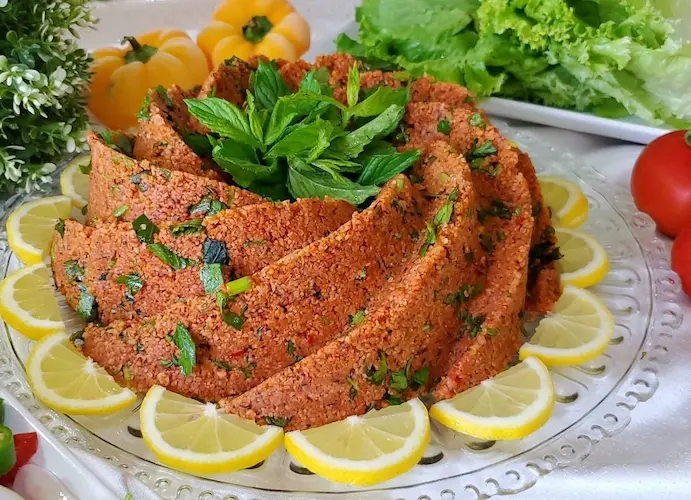
Kısır (Turkish Fine Bulgur Salad)
Ingredients
- 1 ½ cups fine bulgur
- 1 cup hot water
- 3 tbsp olive oil
- 1 tbsp tomato paste
- 1 tbsp pepper paste
- 2 tbsp pomegranate molasses
- 1 tbsp lemon juice
- 1 tsp salt
- ½ tsp black pepper
- ½ tsp red pepper flakes
- 4 green onions
- ½ cup parsley
- 1 tomato
- 1 cucumber
Instructions
- Place the fine bulgur in a large mixing bowl and pour hot water over it. Cover and let it sit for 10–15 minutes until the bulgur softens and absorbs the water completely.
- In a separate bowl, whisk together olive oil, tomato paste, pepper paste, pomegranate molasses, lemon juice, salt, black pepper, and red pepper flakes until smooth and fully combined.
- Fluff the softened bulgur with a fork to separate the grains, then pour the prepared dressing over it. Mix thoroughly and gently knead for 2–3 minutes to help the bulgur absorb the flavors.
- Add the chopped green onions, parsley, tomato, and optional cucumber. Fold everything together until evenly distributed.
- Let the kısır rest for about 10 minutes before serving to allow the flavors to meld. Taste and adjust seasoning if needed, then serve fresh.
Notes
- Use fine bulgur only
- Adjust acidity to taste
- Best served fresh