Turkish badem ezmesi is a soft almond confection with a clean, rich flavor and a delicately crumbly bite. Unlike brightly flavored candies, its charm comes from simplicity: finely ground almonds, a light sugar syrup and careful shaping. Served in small slices beside Turkish coffee, it is an elegant sweet that feels both festive and comforting.
This homemade Turkish marzipan recipe is inspired by the traditional almond paste associated with Edirne. The protected regional product, Edirne Badem Ezmesi, follows registered production standards in Türkiye; this recipe is a practical home version designed for readers who want to recreate its familiar almond-and-syrup character.
Recipe at a Glance
- Prep Time: 20 minutes
- Cook Time: 10 minutes
- Cooling Time: 45 minutes
- Total Time: 1 hour 15 minutes
- Yield: About 18 small pieces
- Method: Stovetop syrup and hand shaping
Jump to:
- What Is Turkish Badem Ezmesi?
- The Edirne Almond Paste Tradition
- Ingredients
- How to Make Turkish Marzipan
- Expert Tips
- Common Mistakes
- Serving and Presentation
- Storage
- Frequently Asked Questions
What Is Turkish Badem Ezmesi?
Turkish badem ezmesi is a traditional almond sweet made by combining finely ground blanched almonds with cooked sugar syrup, then shaping the mixture into smooth rolls and slicing it into small pieces. In English, it is often compared with marzipan, although Turkish badem ezmesi is usually served plainly so that the almond flavor remains the focus.
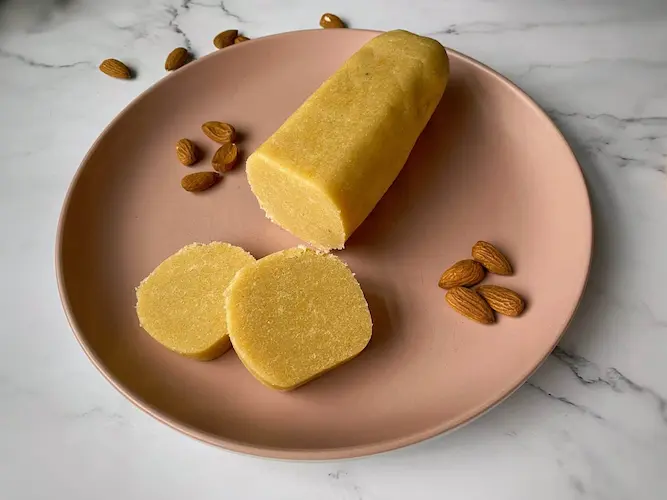
The finished sweet should be pale almond in color, smooth inside and tender when bitten. It is not intended to be sticky like candy or heavily flavored with extracts. Good badem ezmesi tastes first of almonds, followed by a gentle sweetness.
For more traditional sweets, explore our Turkish desserts collection.
The Edirne Almond Paste Tradition
Badem ezmesi has a particularly strong connection with the northwestern Turkish city of Edirne. Edirne Badem Ezmesi is registered in Türkiye as a geographically indicated product and is traditionally prepared by mixing ground almonds with cooked syrup, cooling the paste on a marble surface, rolling it into cylinders and cutting it into neat portions.
According to the official registration specification, authentic commercial Edirne Badem Ezmesi is associated with almonds grown in Edirne and production carried out within the region. For that reason, the recipe below should be understood as a home-style Turkish badem ezmesi inspired by the traditional method, rather than a certified Edirne product.
For the official geographical indication record, see the TÜRKPATENT Edirne Badem Ezmesi registration page.
Ingredients for Turkish Marzipan
This small-batch recipe makes approximately 18 pieces. Use a kitchen scale for the most dependable texture; almond paste is sensitive to the balance between almonds and syrup.
- 175 g finely ground blanched almonds or almond flour: Blanched almonds create the pale, smooth appearance associated with badem ezmesi. Choose finely ground almonds with a fresh, sweet aroma.
- 275 g granulated sugar: The syrup binds the almond flour and gives the confection its soft, sliceable texture.
- 50 ml water: Just enough to dissolve the sugar and create a concentrated syrup.
- A small pinch of cream of tartar: Helps stabilise the syrup and reflects the traditional production method.
- 1/4 teaspoon lemon juice, only if cream of tartar is unavailable: Use this as a practical household substitute, not together with cream of tartar.
Optional for serving: Finely chopped pistachios for presentation, or small cups of Turkish coffee alongside the sliced almond paste.
How to Make Turkish Marzipan (Badem Ezmesi)
1. Prepare the Almonds
If using ready-ground blanched almond flour, check that it is fine and free of large pieces. If grinding blanched almonds at home, pulse them carefully in a food processor until very fine. Stop before they release too much oil and begin turning into almond butter.
2. Make the Sugar Syrup
Place the sugar, water and cream of tartar in a small heavy-based saucepan. Heat gently until the sugar dissolves, then bring the syrup to a steady boil without stirring aggressively.
Cook until the syrup reaches approximately 118–120°C / 244–248°F on a sugar thermometer. At this stage, the syrup is concentrated enough to bind the almonds into a smooth paste once cooled.
Kitchen safety note: Hot sugar syrup can burn severely. Handle the pan carefully and keep children away from the preparation area.
3. Add the Ground Almonds
Remove the saucepan from the heat. Add the ground blanched almonds and stir firmly with a wooden spoon or silicone spatula until the mixture comes together into a thick, pale almond dough.
At first it may look loose; as the syrup cools and the almonds absorb it, the mixture becomes firmer and easier to shape.
4. Cool the Almond Paste
Transfer the warm mixture onto a sheet of baking paper or a clean, cool work surface. Traditional producers cool the paste on marble; at home, baking paper on a cool tray works well.
Leave it until cool enough to handle, about 20 to 30 minutes. Do not try to shape it while piping hot.
5. Knead Until Smooth
Once warm rather than hot, gently knead the almond paste for 2 to 3 minutes. The mixture should become smoother and hold together without crumbling apart.
If it feels slightly sticky, allow it to cool for another few minutes. Avoid adding extra sugar or almond flour immediately, as the texture continues to firm as it rests.
6. Roll and Slice
Divide the paste into two portions and roll each into a smooth cylinder, approximately 2.5 cm / 1 inch thick. Wrap in baking paper and leave to rest for 15 minutes so the shape sets neatly.
Cut into small slices using a sharp knife. Serve plain, or arrange the pieces with a few pistachios for color.
Expert Tips for Smooth Badem Ezmesi
- Use blanched almonds. Almond skins darken the mixture and create a more rustic texture. Traditional-looking badem ezmesi is pale and smooth.
- Measure by weight, not volume. Cups of ground almonds vary significantly depending on how finely they are ground and how tightly they are packed.
- Keep the almond flour fine. Coarse almonds make the finished slices crumbly rather than silky.
- Do not overcook the syrup. A syrup cooked too far produces hard or brittle almond paste instead of a soft confection.
- Allow the paste to cool before judging it. Warm badem ezmesi is naturally softer and stickier than the finished sweet.
- Serve in small portions. Badem ezmesi is rich and sweet; small slices are the traditional and most enjoyable way to present it.
Common Mistakes to Avoid
Using Almond Meal with Skins
Natural almond meal can be used in some desserts, but it creates a darker, rougher sweet. For classic-looking Turkish badem ezmesi, finely ground blanched almonds give the cleanest flavor and smoothest texture.
Adding Too Much Water
The original draft used an extremely large amount of water, which would create a loose syrup and make the paste difficult to set. This recipe uses only enough water to dissolve and cook the sugar properly.
Grinding Almonds into Butter
If processing almonds at home, use short pulses. Grinding continuously releases oil and changes the texture from fine almond meal into a greasy paste.
Slicing Before the Paste Has Rested
Warm almond paste may flatten or stick to the knife. Allow the rolls to cool and settle before slicing for cleaner, more attractive pieces.
Serving and Presentation
Turkish badem ezmesi is best served in small slices on a simple dessert plate. It is naturally rich, so one or two pieces are usually enough alongside tea or coffee.
The most traditional pairing is fragrant, unsweetened Turkish coffee. The coffee’s bitterness balances the sweet almond paste, while the small size of each piece makes it ideal for slow, conversational serving.
For a Turkish dessert selection, present badem ezmesi alongside soft lokum and syrup-based sweets. Readers interested in the culture of lokum can explore the story of Turkish delight, or prepare a homemade batch of Sultan Turkish Delight.
Storage and Make-Ahead Advice
Room temperature: Store badem ezmesi in an airtight container lined with baking paper in a cool, dry place for up to 5 days. Keep it away from direct sunlight and moisture.
Refrigeration: In a warm kitchen, you may refrigerate the pieces in an airtight container. Bring them to room temperature before serving so the almond texture softens again.
Freezing: Freezing is not recommended for best texture, as the surface may become damp after thawing.
Make-ahead: This sweet is ideal to prepare one day before serving, because the slices become easier to cut and the texture settles nicely after resting.
Kitchen Notes
Traditional badem ezmesi is not about elaborate flavorings. Its appeal is the clear taste of almond, the gentle sweetness of syrup and the soft, compact slice. While some modern versions use rose water, orange blossom or chocolate coatings, this recipe keeps the flavor plain and almond-forward.
Because Edirne Badem Ezmesi is a registered regional product, a homemade recipe prepared outside the registered production conditions should be described simply as Turkish badem ezmesi or Turkish marzipan, not sold or presented as certified Edirne Badem Ezmesi.
Frequently Asked Questions
Is Turkish badem ezmesi the same as marzipan?
Turkish badem ezmesi is often translated as marzipan because both sweets are based on almonds and sugar. However, Turkish badem ezmesi is typically served as plain sliced almond paste rather than used for cake decoration. Its flavor is simple, almond-forward and closely associated with traditional confectionery in Edirne.
Why is Edirne associated with badem ezmesi?
Edirne has a long tradition of almond paste production and Edirne Badem Ezmesi is officially registered in Türkiye as a geographically indicated product. Its registered method uses locally associated almonds, cooked syrup, cooling on marble and shaping into cylindrical slices, reflecting the region’s confectionery craftsmanship.
Can I use store-bought almond flour?
Yes. Finely ground blanched almond flour is the easiest choice for a home recipe because it saves time and creates a consistent, smooth paste. Check that it tastes fresh and has no stale or bitter aroma. Almond flour containing skins will work, but the final sweet will look darker.
Why did my almond paste turn crumbly?
Crumbly badem ezmesi usually means the almonds were too coarse, the syrup was insufficient or the mixture cooled before it was kneaded together properly. Warm the mixture very gently for a few seconds if needed, then knead again. Avoid adding large amounts of extra water, which can make it sticky.
Why did my badem ezmesi become too sticky?
Sticky almond paste may result from syrup that was not cooked enough or from slicing the mixture before it had cooled fully. Leave it to rest at room temperature before making adjustments. If it remains very soft, chill briefly before slicing and serve it in small pieces.
Can I flavor Turkish marzipan with rose water or orange blossom?
You can add a few drops of rose water or orange blossom water for a scented variation, but traditional plain badem ezmesi is prized for its clean almond flavor. Use floral aromas sparingly, as too much can overpower the almonds and make the confection taste perfumed rather than delicate.
Is Turkish badem ezmesi suitable for vegan diets?
This home recipe uses almonds, sugar, water and cream of tartar, so it contains no dairy or eggs and is suitable for many vegan diets. Always check the processing details of packaged sugar or optional garnishes according to your personal dietary requirements and allergen needs.
How should I serve Turkish badem ezmesi?
Cut it into small cylindrical slices and serve at room temperature with Turkish coffee or tea. Because it is concentrated and sweet, a small portion is enough. For a dessert tray, pair it with lokum or other Turkish sweets, keeping presentation simple so the almond flavor remains central.
Turkish Marzipan Recipe (Badem Ezmesi)
Ingredients
- 175 g finely ground blanched almonds or blanched almond flour
- 275 g granulated sugar
- 50 ml water
- Small pinch of cream of tartar
- Optional: 1/4 teaspoon lemon juice only when cream of tartar is unavailable
Instructions
- Check that the blanched almond flour is finely ground and fresh.
- Combine sugar, water and cream of tartar in a small saucepan.
- Heat gently until dissolved, then boil until the syrup reaches 118–120°C / 244–248°F.
- Remove from the heat and immediately stir in the ground almonds.
- Transfer the thick almond mixture onto baking paper or a cool clean surface.
- Leave until cool enough to handle, approximately 20 to 30 minutes.
- Knead gently until smooth and cohesive.
- Divide into two portions and roll into cylinders approximately 2.5 cm / 1 inch thick.
- Rest for 15 minutes, then cut into approximately 18 small pieces.
- Serve at room temperature with Turkish coffee or tea.
Notes
- Use gram measurements for reliable results.
- Do not grind almonds continuously or they may become oily.
- The syrup is extremely hot; handle it carefully.
- This is a home-style Turkish badem ezmesi recipe inspired by traditional methods, not a certified Edirne Badem Ezmesi product.
- Store in a cool, dry place in an airtight container.