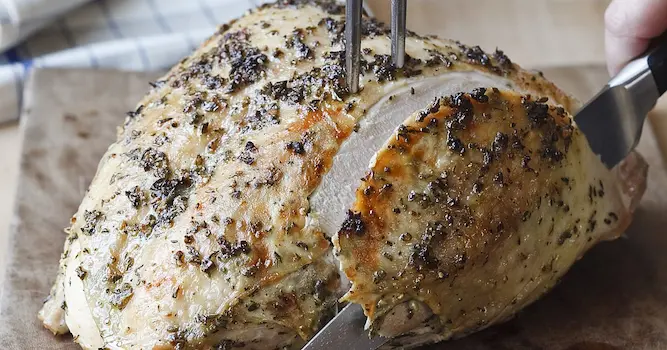
This Turkish style roasted turkey breast recipe is juicy, aromatic, and perfect for a warm family dinner, holiday table, or special gathering. Instead of a plain roasted turkey, this version uses olive oil, butter, garlic, paprika, thyme, oregano, lemon, and a gentle Turkish-inspired seasoning blend.
Roasted whole turkey is not an everyday traditional dish in Turkey, but oven-roasted poultry has a very familiar place in Turkish home cooking. In many Turkish homes, chicken, turkey, or meat is often prepared with olive oil, butter, garlic, tomato paste, herbs, and simple spices. This recipe follows that same home-style logic and turns turkey breast into a practical, flavorful main dish that still feels connected to Turkish cuisine.
The goal is simple: tender meat, a fragrant golden crust, and a taste that works beautifully with Turkish side dishes such as Turkish bulgur pilaf, Turkish rice pilaf, and Turkish cacık.
What Is Turkish Style Roasted Turkey Breast?
Turkish style roasted turkey breast is an oven-roasted turkey recipe seasoned with ingredients often used in Turkish kitchens: olive oil, butter, garlic, paprika, thyme, oregano, lemon, and optional red pepper paste. It is not a centuries-old regional Turkish dish, but it is a Turkish-inspired home method that fits naturally into a Turkish dinner table.
Turkey breast is lean, so it needs flavor and moisture. The olive oil and butter help the surface brown beautifully, while garlic, paprika, thyme, and oregano give the meat a warm, savory aroma. Lemon adds freshness and balances the richness.
This dish is especially useful when you want a lighter main course than lamb or beef but still want something elegant enough for guests. It can be served for New Year dinners, family gatherings, Sunday meals, or any table where you want a simple but impressive main dish.
Why You Will Love This Recipe
- It is easier than roasting a whole turkey. Turkey breast cooks faster and is easier to slice.
- It has a Turkish flavor profile. Garlic, paprika, oregano, olive oil, and butter make it more aromatic than a plain roast.
- It stays juicy when cooked correctly. The recipe uses resting time, moderate oven heat, and a thermometer-friendly method.
- It works with Turkish side dishes. Bulgur pilaf, rice pilaf, lentil soup, cacık, and roasted vegetables all pair well.
- It is good for meal prep. Leftovers can be used in sandwiches, salads, wraps, and rice bowls.
Ingredients
- 2–3 kg turkey breast, bone-in or boneless: Bone-in turkey breast usually stays juicier and has deeper flavor. Boneless turkey breast is easier to slice and works well for practical home cooking.
- 2 tablespoons olive oil: Olive oil helps carry the spices and gives the turkey a soft, Mediterranean-style aroma. Extra virgin olive oil is ideal, but regular olive oil also works.
- 2 tablespoons melted butter: Butter adds richness and helps create a golden surface. In Turkish home cooking, butter is often used to finish meat, rice, soup, and roasted dishes.
- 4 garlic cloves, crushed or finely grated: Garlic gives the turkey a deeper savory flavor. Grating it helps the flavor spread evenly through the marinade.
- 1 tablespoon Turkish red pepper paste, optional: This is called biber salçası in Turkish. It adds color, depth, and a gentle pepper flavor. If unavailable, use 1 teaspoon extra paprika with 1 teaspoon tomato paste.
- 2 teaspoons salt: Salt is essential because turkey breast is thick and lean. Seasoning only the surface lightly will not be enough.
- 1 teaspoon black pepper: Black pepper gives mild warmth without overpowering the Turkish spice profile.
- 1 teaspoon sweet paprika: Paprika gives color and a mild smoky-sweet aroma. Turkish sweet red pepper powder is perfect if you can find it.
- 1 teaspoon dried thyme: Thyme is commonly used in Turkish meat and poultry dishes. It gives a familiar savory note.
- 1 teaspoon dried oregano: Oregano adds a Mediterranean flavor. Turkish oregano is stronger than many supermarket versions, so use a little less if yours is very fragrant.
- 1 lemon, sliced: Lemon adds freshness and gently perfumes the roasting pan.
- 1 small onion, thickly sliced: Onion creates a natural base under the turkey and prevents the meat from sticking to the pan.
- 120 ml chicken stock or water: A small amount of liquid keeps the roasting pan from drying and gives you flavorful pan juices.
Ingredient Notes and Substitutions
If you cannot find Turkish red pepper paste: Use tomato paste mixed with sweet paprika. It will not taste exactly the same, but it gives color and body to the marinade.
If turkey breast is unavailable: You can use whole chicken, chicken breast with skin, or turkey thighs. Chicken cooks faster, so always check the internal temperature.
If you prefer no butter: Replace butter with extra olive oil. The result will be lighter, but still delicious.
If you like spicy food: Add 1/2 teaspoon pul biber, also known as Turkish red pepper flakes. If you cannot find pul biber, use Aleppo pepper or mild chili flakes.
If using boneless turkey breast: It may cook faster than bone-in turkey breast. Start checking the internal temperature after about 75–80 minutes.
How to Make Turkish Style Roasted Turkey Breast
Step 1: Bring the Turkey to Room Temperature
Remove the turkey breast from the refrigerator 30–40 minutes before cooking. This helps the meat cook more evenly. Do not leave it outside for hours; a short resting period before roasting is enough.
Step 2: Dry the Surface Well
Pat the turkey breast dry with paper towels. This is important. If the surface is wet, the marinade becomes watery and the skin will not brown properly.
Step 3: Prepare the Turkish Style Marinade
In a small bowl, mix olive oil, melted butter, crushed garlic, red pepper paste, salt, black pepper, paprika, thyme, and oregano. Stir until you get a thick, spreadable marinade.
Step 4: Season the Turkey Generously
Rub the marinade all over the turkey breast. If the turkey has skin, gently loosen the skin with your fingers and spread some marinade underneath. This gives better flavor and helps the meat stay juicy.
Step 5: Prepare the Roasting Pan
Place thick onion slices and lemon slices in the bottom of a roasting pan. Put the turkey breast on top. Pour chicken stock or water into the pan, but do not pour it directly over the seasoned turkey.
Step 6: Roast at the Right Temperature
Preheat the oven to 180°C / 350°F. Roast the turkey breast for about 90–120 minutes, depending on size and whether it is bone-in or boneless.
After the first 45 minutes, baste the turkey with pan juices every 25–30 minutes. If the top browns too quickly, cover it loosely with foil.
Step 7: Check the Internal Temperature
The turkey is ready when the thickest part reaches 74°C / 165°F. A meat thermometer is the safest and most reliable method. Do not guess by color alone, because turkey breast can look cooked before it is fully safe inside.
Step 8: Rest Before Slicing
Remove the turkey from the oven and let it rest for 15–20 minutes. This step is not optional. Resting allows the juices to settle back into the meat, giving you cleaner and juicier slices.
Expert Tips
- Use a thermometer. Turkey breast becomes dry when overcooked, so temperature matters more than cooking time.
- Do not skip the butter or oil. Turkey breast is lean and needs fat for flavor and moisture.
- Season under the skin. If the turkey has skin, placing marinade under it gives much better flavor.
- Let it rest before slicing. Cutting too early causes the juices to run out onto the board.
- Slice against the grain. This makes the meat feel more tender.
Common Mistakes
- Cooking at very high heat: High heat can brown the outside too quickly while leaving the inside undercooked.
- Using too little seasoning: Turkey breast is thick, so it needs a generous marinade.
- Skipping the drying step: A wet surface prevents proper browning.
- Not resting the meat: This is one of the biggest reasons turkey turns dry.
- Guessing the doneness: Always check the thickest part with a thermometer.
Serving and Presentation
For a Turkish-style table, serve this roasted turkey breast with warm pilaf, yogurt-based sides, salad, and a light soup. The flavor is gentle enough to work with both everyday sides and more festive dishes.
For presentation, slice the turkey breast neatly and arrange it on a large serving plate. Spoon a little warm pan juice over the slices and garnish with lemon, parsley, or roasted onions from the pan.
Storage and Reheating
Refrigerator: Store leftover turkey in an airtight container for up to 4 days.
Freezer: Freeze sliced turkey for up to 3 months. Wrap portions tightly to prevent freezer burn.
Reheating: Reheat covered at 160°C / 320°F with a spoonful of stock or water. Avoid high heat, as it can dry the meat.
Leftover ideas: Use sliced turkey in sandwiches, wraps, salads, rice bowls, or with leftover bulgur pilaf.
Frequently Asked Questions
Is roasted turkey breast a traditional Turkish recipe?
Roasted turkey breast is not a classic regional Turkish dish like kebab, mantı, or dolma. However, this version uses Turkish-style seasonings and home-cooking techniques. Olive oil, butter, garlic, paprika, oregano, thyme, and red pepper paste make it suitable for a Turkish-inspired dinner table.
How long does turkey breast take to roast?
A 2–3 kg turkey breast usually takes about 90–120 minutes at 180°C / 350°F. Boneless turkey breast may cook faster, while bone-in turkey breast may take longer. The safest method is to check the thickest part with a meat thermometer.
What internal temperature should turkey breast reach?
Turkey breast should reach 74°C / 165°F in the thickest part. This temperature makes the meat safe to eat while helping you avoid overcooking. After removing it from the oven, rest it for 15–20 minutes before slicing.
How do I keep turkey breast juicy?
Use enough fat in the marinade, roast at moderate heat, baste with pan juices, and avoid overcooking. The most important step is resting the turkey after roasting. If you slice it immediately, the juices will escape and the meat may become dry.
Can I marinate the turkey breast overnight?
Yes. You can season the turkey breast and refrigerate it for up to 24 hours before roasting. This gives the spices more time to flavor the meat. Before cooking, let it sit at room temperature for 30–40 minutes so it roasts more evenly.
Can I make this recipe without red pepper paste?
Yes. Red pepper paste adds a Turkish flavor, but it is optional. If you cannot find it, mix 1 teaspoon tomato paste with 1 teaspoon sweet paprika. This gives a similar color and mild depth, although the taste will be less traditional.
What should I serve with Turkish style roasted turkey breast?
It pairs very well with Turkish bulgur pilaf, rice pilaf, cacık, lentil soup, roasted vegetables, and fresh salad. For a richer table, you can also serve it with pickles, yogurt, and warm flatbread.
Can I use chicken instead of turkey?
Yes. Whole chicken or chicken breast can be prepared with the same marinade. Chicken cooks faster than turkey, so reduce the cooking time and check the internal temperature. Chicken should also reach 74°C / 165°F in the thickest part.
Kitchen Notes
If you want a stronger Turkish flavor, add 1/2 teaspoon pul biber to the marinade. If you want a softer family-friendly version, keep the recipe mild with sweet paprika only. For a richer sauce, strain the pan juices after roasting and serve them warm over the sliced turkey.
Final Thoughts
This Turkish style roasted turkey breast recipe is a practical way to bring Turkish-inspired flavor to a classic oven-roasted dish. It is simple enough for beginners, elegant enough for guests, and flexible enough for holiday meals or everyday family dinners.
The key is not complicated technique. Dry the turkey well, season it generously, roast it gently, check the temperature, and let it rest. With those simple steps, you get juicy turkey breast with a warm, aromatic flavor that fits beautifully on a Turkish table.
Suggested Internal Link Back Opportunities
The following existing pages can naturally link back to this recipe when updated:
- Turkish Bulgur Pilaf — Add this turkey recipe as a main dish pairing.
- Turkish Rice Pilaf — Mention it as a holiday or family dinner pairing.
- Turkish Cacık — Add it as a refreshing side for roasted poultry.
- Turkish Lentil Soup — Suggest it as a starter before roasted turkey.
Turkish Style Roasted Turkey Breast Recipe
Ingredients
- 2 kg turkey breast, bone-in or boneless, bone-in or boneless
- 2 tablespoons olive oil
- 2 tablespoons melted butter
- 4 garlic cloves, crushed or finely grated
- 1 tablespoon Turkish red pepper paste, optional
- 2 teaspoons salt
- 1 teaspoon black pepper
- 1 teaspoon sweet paprika
- 1 teaspoon dried thyme
- 1 teaspoon dried oregano
- 1 lemon, sliced
- 1 small onion, thickly sliced
- 120 ml chicken stock or water
Instructions
- In a bowl, mix olive oil, melted butter, crushed garlic, red pepper paste, salt, black pepper, paprika, thyme, and oregano.
- Rub the marinade all over the turkey breast. If the turkey has skin, gently spread some marinade under the skin as well.
- Place onion and lemon slices in the bottom of a roasting pan.
- Place the turkey breast on top of the onion and lemon slices.
- Pour chicken stock or water into the pan without washing the marinade off the turkey.
- Roast for 90–120 minutes, basting every 25–30 minutes with pan juices.
- If the top browns too quickly, cover loosely with foil.
- Cook until the thickest part reaches 74°C / 165°F.
- Remove from the oven and rest for 15–20 minutes before slicing.
- Slice against the grain and serve with warm pan juices.
Notes
- Bone-in turkey breast usually stays juicier than boneless turkey breast.
- Use a meat thermometer for the best result.
- Do not slice immediately after roasting.
- For a spicier Turkish flavor, add 1/2 teaspoon pul biber.
- If red pepper paste is unavailable, use 1 teaspoon tomato paste plus 1 teaspoon sweet paprika.