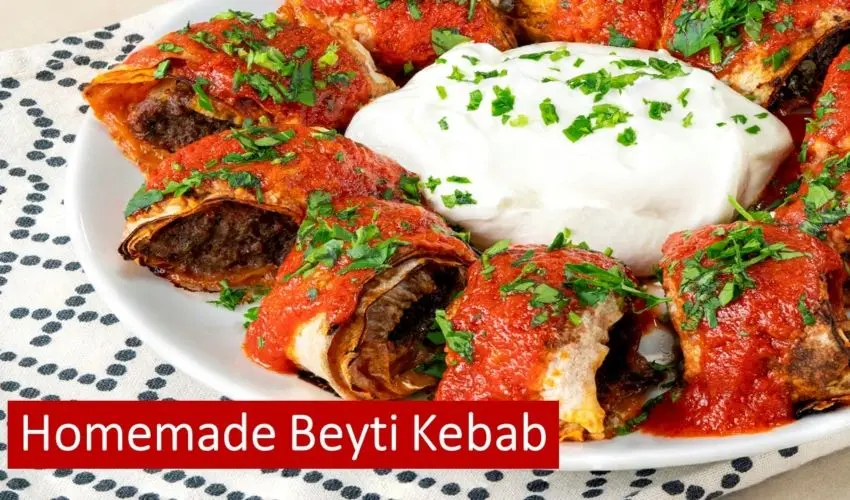
What Is Beyti Kebab?
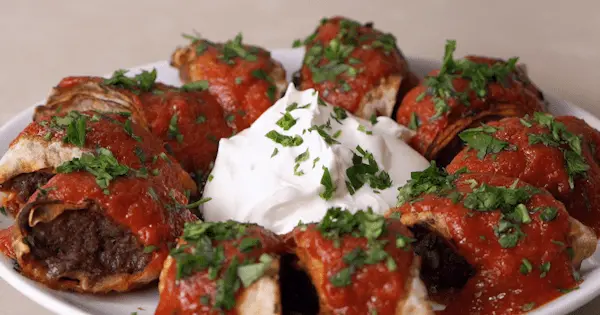
Beyti kebab is a Turkish kebab dish associated with Istanbul’s Beyti restaurant and Beyti Güler. The home-style version commonly called sarma beyti is made with seasoned ground lamb or beef shaped into long kebabs, wrapped in thin bread, sliced and served with warm tomato sauce and yogurt.
It is helpful to understand that restaurant Beyti kebab and the popular homemade sarma beyti are closely related in spirit but not always identical in method. At home, wrapping seasoned minced lamb in yufka or thin lavash creates a practical oven-baked dish with the flavours people love most: savoury meat, toasted bread, buttery tomato sauce and cool yogurt.
This recipe is written specifically for the home kitchen. You do not need a charcoal grill or specialist equipment. The oven gives the wrapped kebabs an evenly browned exterior, while the lamb filling stays tender inside.
For more regional and traditional kebab dishes, visit our Turkish Kebab Recipes Guide, where you can explore the differences between grilled, roasted and sauce-finished Turkish kebaps.
Why This Homemade Beyti Recipe Works
- It respects the dish without pretending to be a restaurant grill method: this is a clearly explained home-style sarma beyti.
- The lamb remains juicy: grated onion and a moderate amount of fat protect the filling during baking.
- The bread becomes lightly crisp: yufka or thin lavash wraps the meat without becoming heavy.
- The sauce is balanced: butter and tomato paste give richness without drowning the kebab.
- It is made for serving: sliced rounds arranged around yogurt create the classic welcoming presentation.
The Turkish Table Behind Sarma Beyti
In Turkish kebab restaurants, the plate matters almost as much as the cooking. Grilled or baked meat is rarely presented alone. Yogurt cools the richness, tomato sauce brings sweetness and acidity, bread catches the juices, and parsley or sumac onion adds freshness.
Sarma beyti is especially loved because it gathers those elements into one elegant serving plate. Each slice has soft, seasoned lamb at its centre and a lightly toasted bread layer around it. A spoonful of sauce softens the upper surface while the lower edges retain a little bite. Yogurt makes every forkful feel balanced rather than heavy.
If you enjoy kebabs with more direct charcoal character, try our Authentic Adana Kebab Recipe. For another sauce-and-bread Turkish restaurant classic, see the İskender Kebab Recipe.
Ingredients for Lamb Beyti Kebab
This recipe makes four satisfying dinner portions. The ingredient list is simple, but each part has a purpose: lamb for flavour, onion for moisture, yufka for structure, sauce for warmth and yogurt for balance.
For the Lamb Kebab Filling
- 500 g ground lamb, ideally 15–20% fat: Lamb gives Beyti its rich savoury character. Avoid very lean mince, which can dry out in the oven.
- 1 small onion, finely grated and lightly squeezed: Adds sweetness and moisture without making the mixture watery.
- 2 garlic cloves, finely grated: Brings depth but should not dominate the lamb.
- 40 g fine breadcrumbs, about 1/3 cup: Helps the mixture hold its shape inside the wrap.
- 1 small egg: Supports binding, especially for oven baking.
- 2 tablespoons finely chopped flat-leaf parsley: Adds freshness to the filling.
- 1 teaspoon Turkish red pepper flakes or mild pul biber: Adds warmth and colour.
- 1/2 teaspoon ground cumin: Optional, but very good with lamb.
- 1 teaspoon salt: Seasons the meat properly.
- 1/2 teaspoon black pepper: Balances the richness.
For Wrapping
- 3 large sheets fresh yufka or 4 thin lavash breads: Choose a thin, flexible bread that can roll tightly without cracking.
- 30 g melted butter, about 2 tablespoons: Brushed lightly over the bread for colour and a crisp finish.
For the Tomato-Butter Sauce
- 30 g butter, about 2 tablespoons: Gives the sauce its classic rich finish.
- 1 tablespoon olive oil: Helps prevent the butter from browning too quickly.
- 1 1/2 tablespoons tomato paste: Creates a concentrated, savoury sauce.
- 150 ml hot water: Loosens the paste into a spoonable sauce.
- 1/4 teaspoon salt: Add carefully, as the kebab is already seasoned.
- A pinch of red pepper flakes: Optional, for gentle warmth.
For Serving
- 200 g thick plain yogurt or strained yogurt: Serve cool beside the hot kebab.
- 1 small garlic clove, grated: Optional, for garlic yogurt.
- Chopped parsley: For a fresh finishing touch.
- Sumac onion salad or grilled peppers: Optional but highly recommended.
Should You Use Yufka, Lavash or Filo Dough?
Fresh yufka is the best choice for a soft yet lightly crisp home-style sarma beyti. It bends easily around the meat and has enough body to hold its shape after slicing.
Thin lavash is a practical substitute outside Türkiye. Choose flexible lavash rather than thick, fluffy flatbread. If it feels dry, cover it briefly with a clean damp towel before rolling.
Filo dough can be used, but it gives a more brittle and pastry-like result. If using filo, layer two sheets together with only a very light brush of butter, then roll carefully. The finished dish will be crispier than a yufka-based Beyti.
Kitchen note: The aim is not to bury the lamb in pastry. Use just enough thin bread to hold and toast around the kebab filling.
How to Make Lamb Beyti Kebab Step by Step
Prepare the yogurt and serving plate before the kebab comes out of the oven. Sarma beyti is at its best when the slices are hot, the sauce is warm and the yogurt is cool.
Step 1: Prepare the Lamb Mixture
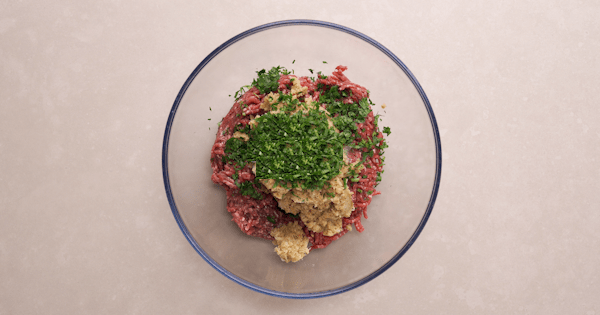
Place the ground lamb in a large bowl. Add the grated onion, garlic, breadcrumbs, egg, parsley, red pepper flakes, cumin, salt and black pepper. Knead with clean hands for 2 to 3 minutes, just until the mixture becomes evenly combined and slightly tacky.
Cover the bowl and refrigerate for 20 minutes. This short rest firms the mixture, helps the breadcrumbs absorb moisture and makes the lamb easier to shape.
Step 2: Shape the Kebab Logs
Divide the chilled lamb mixture into equal portions. With lightly damp hands, shape each portion into a long, even kebab log, about 2.5 to 3 cm thick. Keeping the logs evenly sized means they will cook at the same rate and look neat when sliced.

Step 3: Wrap the Lamb in Yufka or Thin Lavash
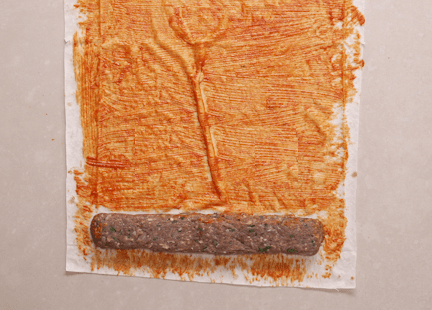
Heat the oven to 190°C / 375°F. Lay one sheet of yufka or a thin lavash rectangle on the work surface. Brush very lightly with melted butter. Place one lamb log near the lower edge, then roll tightly but gently so the bread encloses the filling without tearing.
Repeat with the remaining lamb and bread. Place each wrapped roll seam-side down before slicing.
Step 4: Slice and Bake
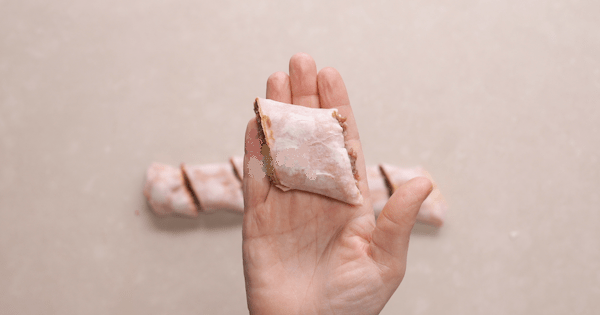
Using a sharp knife, slice the rolls into pieces approximately 3 to 4 cm thick. Arrange them cut-side up on a baking tray lined with parchment paper, leaving a little room between pieces for even browning.
Brush the tops lightly with any remaining melted butter. Bake for 25 to 30 minutes, until the lamb is cooked through and the edges of the bread are golden. Ground lamb should reach a safe internal temperature of 71°C / 160°F.
Step 5: Make the Tomato-Butter Sauce
While the kebab bakes, melt the butter with the olive oil in a small saucepan over medium-low heat. Add the tomato paste and stir for about 1 minute, until fragrant and slightly darker in colour.
Slowly add the hot water, whisking until smooth. Season with a small pinch of salt and red pepper flakes. Simmer for 3 to 4 minutes, until the sauce is glossy and spoonable. It should be rich but not overly thick.
For recipes where Turkish tomato and pepper pastes make the flavour difference, see our guide to Turkish Red Pepper Paste.
Step 6: Plate the Beyti Kebab
Mix the yogurt with grated garlic, if using. Spoon the yogurt into the centre of a warm serving plate. Arrange the baked Beyti slices around it in a circle, then spoon the warm tomato-butter sauce over the kebab pieces without completely covering their crisp edges.

Step 7: Finish and Serve
Sprinkle with chopped parsley and serve immediately while the bread is still lightly crisp and the sauce is hot. Add grilled peppers, sumac onion salad or a side of pilaf for a complete Turkish-style dinner.
Expert Tips for Juicy, Neat Beyti Kebab
- Do not use extra-lean lamb. A little fat is important for tender, flavoursome kebab filling.
- Squeeze the grated onion lightly. Onion keeps the meat moist, but too much liquid can soften the wrap and make shaping difficult.
- Rest the meat mixture before shaping. Twenty minutes in the refrigerator creates noticeably neater rolls.
- Keep the bread layer thin. Thick bread overwhelms the meat and can make the finished slices doughy.
- Slice with a sharp knife. A dull knife presses the rolls out of shape before baking.
- Serve sauce at the end. Pouring sauce over the kebab too early removes the crisp edge that makes sarma beyti enjoyable.
- Keep yogurt cool. The contrast between hot kebab and cold yogurt is part of the dish’s appeal.
Common Mistakes When Making Sarma Beyti
The Lamb Filling Turns Dry
This usually happens when the meat is too lean or the rolls are overbaked. Use lamb with moderate fat and begin checking the tray at 25 minutes. The filling should be fully cooked but still tender and juicy inside the wrap.
The Bread Becomes Soggy
Soggy Beyti often comes from too much onion liquid, too much butter or sauce added before serving. Lightly squeeze the grated onion, brush the bread sparingly and spoon the tomato sauce over the kebab only when the plate is ready to go to the table.
The Rolls Open in the Oven
Place the wrapped rolls seam-side down before slicing and arrange the slices closely enough to hold their form without crowding them. If your lavash is very dry, soften it briefly under a clean slightly damp towel before rolling.
The Sauce Tastes Flat
Tomato paste should cook briefly in butter before water is added. That small step removes its raw edge and gives the sauce deeper flavour. A little Turkish red pepper paste can also add warmth and sweetness when used sparingly.
The Plate Feels Too Heavy
Beyti is a rich dish, so pair it with fresh elements. Yogurt, sumac onion, grilled green pepper, chopped salad or lemony herbs bring balance to the lamb, butter and toasted bread.
Serving and Presentation
Sarma beyti deserves a warm serving plate. Place garlic yogurt in the middle, arrange the slices around it and finish with tomato-butter sauce and parsley. For a more generous kebab-house style meal, add blistered green peppers and roasted tomato halves beside the plate.
A side of Turkish Bulgur Pilaf is especially good with lamb Beyti because its gentle tomato and grain flavour supports the rich meat without competing with it. A crisp shepherd-style salad or sumac onion salad adds welcome freshness.
Serve Beyti immediately. Once the sauce sits on the wrap for too long, the slices remain tasty but lose their attractive lightly crisp surface.
Substitutions and Practical Home Options
Can I Use Beef Instead of Lamb?
Yes. Use ground beef with enough fat to remain juicy, ideally around 15% fat. A half-lamb, half-beef mixture is also very good for readers who want the flavour of lamb with a milder overall result.
Can I Use Tortillas Instead of Yufka?
A thin flour tortilla can work in a practical home version, although the flavour and texture will not be the same as Turkish yufka or thin lavash. Choose the thinnest flexible option available and avoid overfilling it.
Can I Leave Out the Egg?
Yes, especially if your meat mixture binds well after kneading and chilling. In this oven-baked wrapped version, a small egg makes shaping easier, particularly for less experienced cooks or when using very soft lamb mince.
Can I Make It Less Spicy?
Absolutely. Pul biber provides warmth more than sharp heat, but you can reduce it or leave it out. Do not remove the onion, garlic and black pepper, as they build the savoury base of the filling.
Nutrition and Portion Guidance
This recipe serves four as a main course. The calorie value depends strongly on the fat content of the lamb, the amount of bread used and how much yogurt and sauce are served with each plate. With standard portions, expect a rich dinner dish rather than a light snack.
For a more balanced plate, serve a moderate portion of Beyti with yogurt, grilled vegetables and salad. For a fuller Turkish kebab-style dinner, add bulgur pilaf and warm bread at the table.
Storage and Reheating
Store leftover cooked Beyti slices in an airtight container in the refrigerator for up to 3 days. Keep the yogurt and tomato sauce in separate containers whenever possible so the bread does not become soft during storage.
For the best reheating result, place the Beyti slices on a tray and warm them in a 170°C / 340°F oven for 8 to 10 minutes, until heated through. Warm the sauce separately and spoon it over just before serving. Microwaving works in a hurry, but the wrap will lose its crispness.
You can assemble the wrapped lamb rolls several hours before cooking and keep them covered in the refrigerator. Slice and bake them shortly before serving for the best texture. Freezing the uncooked wrapped rolls is possible, but freshly prepared Beyti gives the best result.
Kitchen Notes
- This recipe is a home-style sarma beyti, designed for an ordinary oven rather than a restaurant charcoal grill.
- The Turkish word sarma refers to the wrapped presentation of the kebab.
- Yufka gives the most natural Turkish-style texture; thin lavash is the easiest substitute outside Türkiye.
- Do not claim the dish is low-fat: lamb, butter and yogurt are part of its traditional richness.
- For the best plate, serve the sauce hot and the yogurt cool.
- If using the original step photographs on this page, retain them only if you own them or have publishing rights.
Frequently Asked Questions About Lamb Beyti Kebab
What is Lamb Beyti Kebab?
Lamb Beyti Kebab is a Turkish kebab dish made with seasoned lamb, traditionally connected with the Beyti name in Istanbul. In the popular home-style sarma beyti version, minced lamb is shaped, wrapped in thin yufka or lavash, baked or grilled, then served with tomato-butter sauce and yogurt.
Is Beyti Kebab the same as Adana Kebab?
No. Adana kebab is a spicy minced-meat kebab cooked on skewers and usually served with lavash and grilled vegetables. Beyti is associated with a wrapped or plated presentation, commonly finished with tomato sauce and yogurt. Both use Turkish kebab techniques, but their serving styles are distinct.
What bread should I use for Sarma Beyti?
Fresh yufka is the best choice because it is thin, flexible and browns gently around the lamb. Thin lavash is a very practical alternative. Filo dough can also work, but it creates a crispier, more pastry-like result and should be used in light layers.
Can I make Beyti Kebab with beef?
Yes. Ground beef or a combination of beef and lamb can be used instead of all lamb. Choose meat with enough fat to remain moist in the oven. Very lean beef may make the filling firm and dry, especially once wrapped and baked.
Why does my Beyti Kebab fall apart when sliced?
The filling may be too wet, insufficiently kneaded or not chilled before shaping. Lightly squeeze grated onion, knead until the mixture becomes cohesive and refrigerate it for about 20 minutes. Roll tightly and use a sharp knife so the bread and meat keep their neat shape.
What sauce is served with Beyti Kebab?
A warm tomato-butter sauce is commonly served over home-style Beyti slices, while thick yogurt or garlic yogurt is placed alongside or in the centre of the plate. The sauce adds savoury richness and colour; the yogurt cools and balances the lamb and toasted bread.
Can I prepare Sarma Beyti ahead of time?
Yes. Prepare and wrap the lamb rolls a few hours ahead, cover them carefully and refrigerate until needed. Slice and bake shortly before serving. The cooked dish can also be reheated, but freshly baked Beyti has a better contrast between juicy meat and lightly crisp bread.
What should I serve with Turkish Beyti Kebab?
Serve Beyti with yogurt, warm tomato sauce, grilled peppers, parsley and sumac onion salad. Turkish bulgur pilaf makes an excellent side dish for a complete dinner. Fresh salad is useful too, because its acidity and crunch balance the richness of lamb, butter and bread.
Bring a Turkish Kebab-House Favourite Home
Homemade Lamb Beyti Kebab is the kind of recipe that makes an ordinary dinner feel carefully prepared. It has the familiar comfort of meat and bread, but the sliced presentation, cool yogurt and warm tomato-butter sauce turn it into something much more inviting.
Make it when you want to introduce someone to Turkish kebab cooking beyond the usual takeaway ideas, or when you want a dish that arrives at the table looking generous and celebratory. Slice the rolls neatly, keep the yogurt cold, spoon on the sauce at the last moment and serve while everything is still warm.
Lamb Beyti Kebab Recipe: Homemade Turkish Sarma Beyti
Ingredients
For the lamb kebab filling:
- 500 g ground lamb ideally 15–20% fat
- 1 small onion finely grated and lightly squeezed
- 2 garlic cloves finely grated
- 40 g fine breadcrumbs about 1/3 cup
- 1 small egg
- 2 tablespoons finely chopped flat-leaf parsley
- 1 teaspoon Turkish red pepper flakes or mild pul biber
- 1/2 teaspoon ground cumin optional
- 1 teaspoon salt
- 1/2 teaspoon black pepper
For wrapping:
- 3 large sheets fresh yufka or 4 thin lavash breads
- 30 g melted butter about 2 tablespoons
For the tomato-butter sauce:
- 30 g butter about 2 tablespoons
- 1 tablespoon olive oil
- 1 1/2 tablespoons tomato paste
- 150 ml hot water
- 1/4 teaspoon salt
- A pinch of red pepper flakes optional
For serving:
- 200 g thick plain yogurt or strained yogurt
- 1 small garlic clove grated, optional
- 2 tablespoons chopped parsley
- Sumac onion salad or grilled peppers optional
Instructions
- Place the ground lamb in a large bowl. Add the grated onion, garlic, breadcrumbs, egg, parsley, red pepper flakes, cumin, salt and black pepper. Knead for 2 to 3 minutes until evenly mixed and slightly tacky.
- Cover the lamb mixture and refrigerate for 20 minutes. This firms the filling and makes it easier to shape.
- Preheat the oven to 190°C / 375°F. Divide the lamb mixture into equal portions and shape each into a long kebab log about 2.5 to 3 cm thick.
- Lay a sheet of yufka or thin lavash on the work surface. Brush lightly with melted butter. Place a lamb log near the edge and roll tightly but gently. Repeat with the remaining lamb and bread.
- Place the rolls seam-side down. Slice them into 3 to 4 cm pieces using a sharp knife. Arrange cut-side up on a parchment-lined baking tray and brush lightly with the remaining melted butter.
- Bake for 25 to 30 minutes, until the bread edges are golden and the lamb filling reaches 71°C / 160°F internally.
- Meanwhile, melt the butter with olive oil in a saucepan. Add tomato paste and cook for 1 minute. Whisk in hot water, salt and optional pepper flakes. Simmer for 3 to 4 minutes until smooth and glossy.
- Mix the yogurt with grated garlic, if using. Spoon the yogurt into the centre of a warm serving plate.
- Arrange the baked Beyti slices around the yogurt. Spoon warm tomato-butter sauce over the slices, sprinkle with parsley and serve immediately.
Notes
Recipe Yield: 4 servings
Calories: Approximately 760 kcal
Protein: Approximately 34 g
Carbohydrates: Approximately 45 g
Fat: Approximately 48 g
Nutrition values are estimates and vary according to lamb fat content, bread type and serving amount of sauce and yogurt.