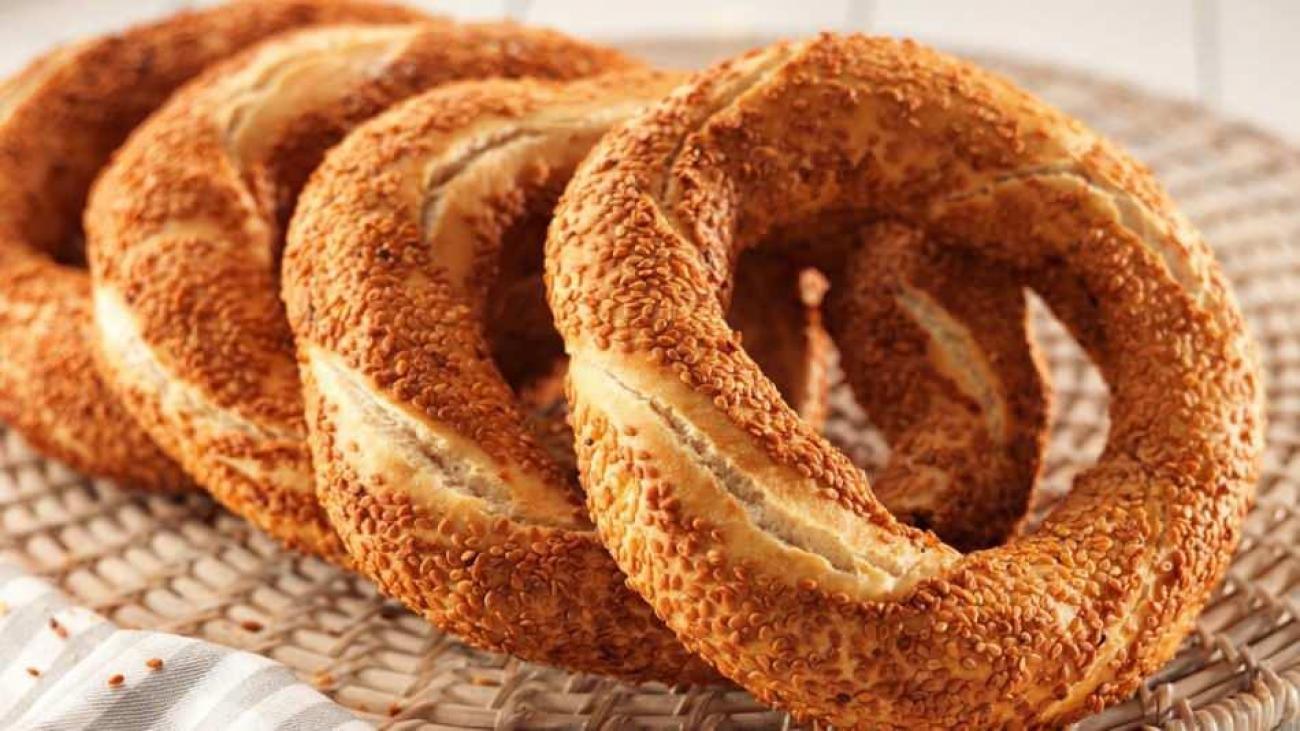
This Turkish Simit Recipe brings the familiar smell of Istanbul street bakeries into your kitchen: crisp golden rings, a tender inside, grape molasses glaze and a thick sesame crust. Simit is simple bread at heart, but the molasses dip and toasted sesame coating make it one of Türkiye’s most beloved everyday foods.
In Türkiye, simit is eaten at breakfast, carried home from neighborhood bakeries, bought from red street carts and enjoyed with hot black tea. It is sometimes called a Turkish bagel, but the texture is different: simit is not boiled, and its crust comes from pekmez, or grape molasses, and sesame seeds.
At a Glance
- Prep Time: 25 minutes
- Rise Time: 1 hour 10 minutes
- Cook Time: 16–18 minutes
- Total Time: About 1 hour 55 minutes
- Servings: 8 simit rings
- Best Served: Warm with Turkish tea, cheese, olives and tomatoes
Jump to:
What Is Turkish Simit?
Turkish simit is a circular sesame-crusted bread made from yeast dough, dipped in diluted grape molasses and coated generously with sesame seeds before baking. It has a crisp outside, a soft but slightly chewy inside and a deep toasted flavor from the sesame and molasses.
Simit is one of Türkiye’s most iconic street foods. You see it at ferry docks, bakery windows, school canteens, office breakfasts and neighborhood carts. A fresh simit with tea is not only breakfast; it is part of daily life.
The key difference between simit and a bagel is the technique. Bagels are boiled before baking, while simit is dipped in molasses water and baked directly. This gives simit its thinner crust, sesame aroma and deep golden color. Grape molasses, known as üzüm pekmezi, is commonly used to help the sesame seeds stick and to create simit’s characteristic color and flavor. :contentReference[oaicite:0]{index=0}
For more homemade Turkish breads, you may also like our Turkish rye bread recipe or Turkish grain bread recipe.
Turkish Simit Recipe Ingredients
This recipe makes 8 medium simit rings. For the best result, use toasted sesame seeds and grape molasses if you can find it. Date, fig or regular molasses can work in a pinch, but the flavor will be slightly different.
For the Dough
- 500 g / about 3 3/4 cups all-purpose flour: Gives structure while keeping the simit light enough for a tender interior.
- 7 g / 2 1/4 teaspoons instant yeast: Helps the dough rise and develop a light bread texture.
- 1 tablespoon sugar: Feeds the yeast and supports gentle browning.
- 1 1/2 teaspoons salt: Balances the sesame and molasses flavor.
- 300 ml / 1 1/4 cups warm water: Use water that feels warm, not hot, about 105–110°F / 40–43°C.
- 2 tablespoons olive oil: Adds softness and makes the dough easier to handle.
For the Molasses Dip
- 120 ml / 1/2 cup grape molasses, pekmez: Gives simit its signature color and subtle sweetness.
- 120 ml / 1/2 cup water: Thins the molasses so it coats the rings evenly.
For the Sesame Coating
- 150–200 g / 1 to 1 1/2 cups toasted sesame seeds: Use plenty; a good simit should be generously covered.
Optional Variation
- Whole wheat flour: Replace up to 100 g / 3/4 cup of the all-purpose flour for a nuttier flavor. The texture will be slightly denser.
How to Make This Turkish Simit Recipe
1. Activate the Yeast
In a large mixing bowl, combine the warm water, sugar and yeast. Let it sit for 5 minutes, until the surface looks slightly foamy. If the mixture does not foam at all, your yeast may be old or the water may have been too hot.
2. Make the Dough
Add the flour, salt and olive oil. Mix until a rough dough forms, then knead for 8 to 10 minutes until smooth and elastic. The dough should feel soft and slightly tacky, but not wet or sticky.
3. Let the Dough Rise
Place the dough in a lightly oiled bowl, cover it and let it rise in a warm place for 45 to 60 minutes, or until nearly doubled in size. Do not rush this step; a proper first rise gives simit a better interior texture.
4. Divide the Dough
Transfer the dough to a lightly floured surface and divide it into 16 equal pieces. You will use two pieces for each simit ring. Cover the pieces with a towel so they do not dry out while you shape them.
5. Roll and Twist
Roll two pieces of dough into ropes about 20 inches / 50 cm long. Place them side by side, twist them together from one end to the other, then join the ends firmly to form a ring. Pinch the seam well so it does not open during baking.
Repeat with the remaining dough. After shaping, gently stretch each ring slightly wider. Simit should be thinner and larger than a bagel, not thick and puffy.
6. Prepare the Molasses and Sesame Coating
Mix the grape molasses and water in a wide shallow bowl. Place the toasted sesame seeds in a second wide bowl or plate.
Dip each shaped ring into the molasses mixture, coating both sides lightly. Let the excess drip off, then press the ring into the sesame seeds until fully covered.
7. Final Rest
Place the coated rings on parchment-lined baking sheets. Let them rest for 15 to 20 minutes while the oven heats. This short final rest helps the simit bake evenly without becoming too dense.
8. Bake Until Deep Golden
Preheat the oven to 425°F / 220°C. Bake for 16 to 18 minutes, rotating the tray halfway through if your oven browns unevenly. The simit should be deep golden brown with a crisp sesame crust.
Let the rings cool for 5 to 10 minutes before serving. Simit is best while still warm, when the crust is crisp and the sesame aroma is strongest.
Expert Tips for Perfect Turkish Simit
- Toast the sesame seeds first. Toasted sesame gives a deeper nutty flavor and a more traditional aroma.
- Use grape molasses if possible. Pekmez creates the classic color and flavor. Regular molasses works, but it tastes stronger and less fruity.
- Do not make the dough too stiff. A slightly soft dough is easier to roll into long ropes and produces a better texture.
- Seal the ends firmly. Press the joined ends together well so the ring stays closed in the oven.
- Use enough sesame. A sparse coating makes simit look unfinished. Press the dough gently into the seeds so they cling well.
- Bake hot. A hot oven gives the crisp crust that makes simit different from a soft bread roll.
Common Mistakes to Avoid
Making the Rings Too Thick
Thick rings bake up more like bread rolls. Traditional simit should be slimmer, wider and crisp around the edges. After shaping each ring, stretch it gently so it has room to bake evenly.
Skipping the Molasses Dip
The molasses dip is not just for color. It helps the sesame seeds stick and gives simit its lightly caramelized crust. Without it, the bread will taste flatter and look pale.
Using Raw, Pale Sesame Seeds
Sesame seeds are the main flavor of simit. Lightly toasted seeds give better aroma and color. If your sesame seeds are very pale, toast them briefly in a dry pan before coating the dough.
Over-Flouring the Surface
Too much flour makes the ropes slide instead of roll and can dry the dough. Use only a light dusting, and keep the dough covered while shaping.
Serving and Presentation
In Türkiye, simit is most often served with hot Turkish tea. A classic breakfast plate includes white cheese, olives, sliced tomatoes, cucumber, honey, butter and sometimes boiled eggs.
Simit is also wonderful beside soup. Serve it with Turkish lentil soup for a comforting lunch, or slice it horizontally and use it for a simple sandwich with cheese, roasted peppers or fresh herbs.
For another bread with a strong Turkish breakfast feeling, try our Turkish bread recipe without yeast.
Storage and Reheating
Room temperature: Fresh simit is best eaten the day it is baked. Store leftovers in an airtight bag or container for up to 2 days.
Freezer: Freeze fully baked and cooled simit for up to 2 months. Wrap individually so they do not dry out.
Reheating: Reheat at 350°F / 175°C for 5 to 6 minutes, or until the crust becomes crisp again. Avoid microwaving if you want to keep the sesame crust crunchy.
Kitchen Notes
This Turkish Simit Recipe is designed for a home oven, so the texture may be slightly different from bakery simit baked in very hot stone ovens. Still, the essential character is the same: twisted dough, pekmez dip, generous sesame coating and a deep golden crust.
If you prefer a softer simit, bake it slightly less. If you want a crisper street-style result, bake until the sesame coating is richly browned and let the simit cool uncovered for a few minutes before serving.
For a more rustic flavor, replace a small portion of the white flour with whole wheat flour. Do not replace all the flour, because the dough may become heavy and harder to shape.
Frequently Asked Questions
What is Turkish simit made of?
Turkish simit is made from a simple yeast dough prepared with flour, water, yeast, salt, sugar and a little olive oil. The shaped rings are dipped in grape molasses mixed with water, then coated heavily with sesame seeds and baked until crisp, golden and fragrant.
Is simit the same as a bagel?
No. Simit and bagels are both ring-shaped breads, but they are made differently. Bagels are usually boiled before baking, while simit is dipped in molasses water and coated with sesame seeds. Simit is generally lighter, thinner and crispier, with a stronger toasted sesame flavor.
Can I make this Turkish Simit Recipe without grape molasses?
Yes. Grape molasses gives the most traditional flavor and color, but you can use date molasses, fig molasses or regular molasses diluted with water. The taste will change slightly, yet the coating will still help the sesame seeds stick to the dough.
Why is my simit not crispy?
Simit may turn soft if the oven is not hot enough, the rings are too thick or the sesame coating is too wet. Bake at 425°F / 220°C, shape the rings fairly slim and let excess molasses drip off before coating with sesame seeds.
Can I freeze simit?
Yes. The easiest method is to freeze baked simit after it has cooled completely. Wrap each ring well and freeze for up to 2 months. To serve, thaw at room temperature and reheat in a 350°F / 175°C oven until the crust becomes crisp again.
Can I make simit dough ahead of time?
You can prepare the dough, let it rise once, then refrigerate it overnight in a covered bowl. The next day, bring it closer to room temperature, divide, shape, dip in molasses, coat with sesame and bake. This method can improve flavor and save time in the morning.
What do Turkish people eat with simit?
Simit is commonly eaten with Turkish tea, white cheese, olives, tomatoes and cucumbers. It is also enjoyed plain as a street snack or used as sandwich bread. Some people serve it with soup, especially for a simple lunch or a cozy homemade meal.
Can I use whole wheat flour for simit?
Yes, but replace only part of the flour. Using 25–30% whole wheat flour gives a nuttier flavor while keeping the dough flexible. If you use too much whole wheat flour, the simit may become dense and harder to roll into long ropes.
This Turkish Simit Recipe gives you the essential street-bakery experience at home: crisp sesame crust, soft bread inside and the unmistakable aroma of pekmez and toasted sesame. Serve warm with tea, cheese and olives for a true taste of Turkish breakfast. Afiyet olsun!

Turkish Simit
Equipment
- Mixing bowl
- Baking sheet
- Parchment paper
- Small bowls for dipping
Ingredients
For the Simit Dough
- 3 ¾ cups all-purpose flour
- 2 ¼ teaspoons instant yeast 1 packet
- 1 tablespoon sugar
- 1 ½ teaspoons salt
- 1 ¼ cups warm water 105–110°F / 40–43°C
- 2 tablespoons olive oil
For the Molasses Dip
- ½ cup grape molasses pekmez
- ½ cup water
For the Coating
- 1 to 1 ½ cups toasted sesame seeds
Instructions
- In a large mixing bowl, combine warm water, sugar, and yeast. Let the mixture sit for about 5 minutes until slightly foamy.
- Add olive oil, salt, and flour gradually. Mix until a soft dough forms.
- Knead the dough on a lightly floured surface for 8–10 minutes until smooth and elastic.
- Place the dough in a lightly oiled bowl, cover, and let it rise in a warm place for 45–60 minutes, or until doubled in size.
- Transfer the dough to a floured surface and divide it into 8 equal pieces.
- Roll each piece into a rope about 20 inches long. Twist two ropes together and join the ends to form a ring.
- In a bowl, mix the grape molasses and water.
- Dip each simit ring into the molasses mixture, then coat generously with toasted sesame seeds.
- Place the shaped simit on a parchment-lined baking sheet and let them rest for 20 minutes.
- Preheat the oven to 425°F (220°C).
- Bake for 15–18 minutes until the simit are deep golden brown and crisp.
- Allow them to cool slightly before serving.
Notes
- For the most authentic flavor, use grape molasses (pekmez) in the dipping mixture.
- Toasting the sesame seeds before coating the dough enhances the nutty aroma and improves crust color.
- If pekmez is unavailable, mix molasses with water as a substitute.
- Simit tastes best the day it is baked but can be reheated in a 350°F (175°C) oven for a few minutes to restore crispness.
- For a traditional Turkish breakfast, serve simit with white cheese, olives, tomatoes, cucumbers, and hot Turkish tea.