The World’s Oldest Dessert: A Journey of Unity, Nutrition, and Turkish Tradition
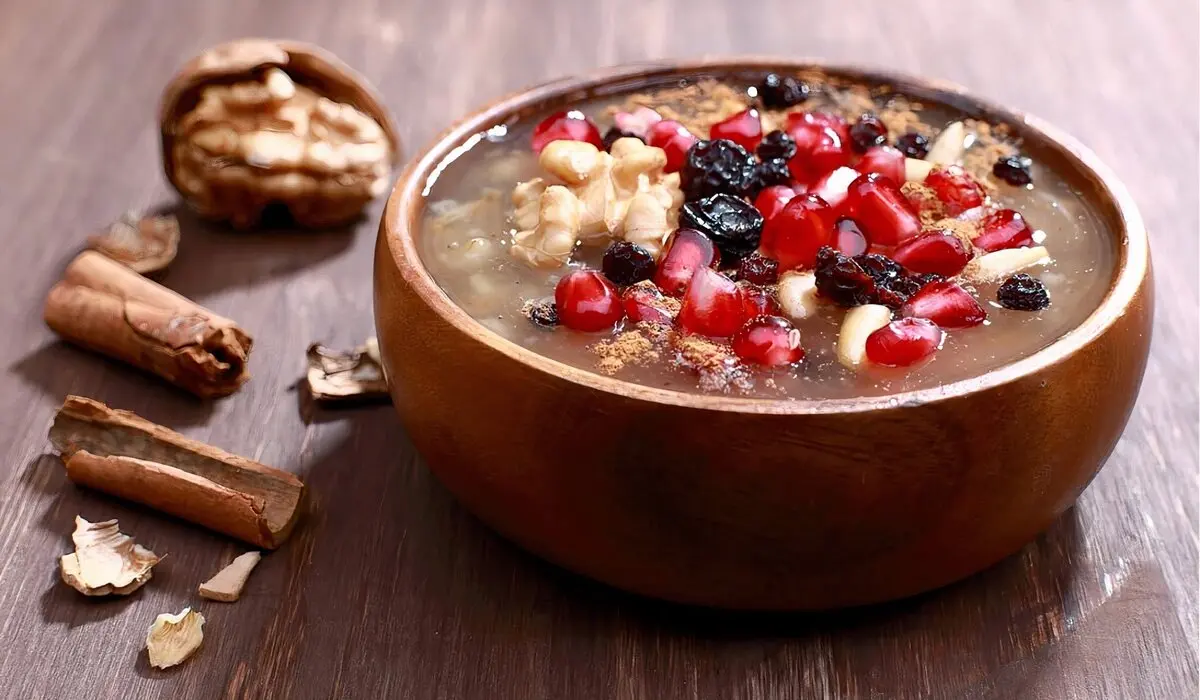
Aşure (pronounced ah-shoo-reh), globally known as Noah’s Pudding, is arguably the most symbolic dish in Turkish cuisine. It isn’t just a dessert; it is a bowl of history, a “vegan-friendly” powerhouse of nutrients, and a celebration of human survival. Legend tells us that when Noah’s Ark finally rested on Mount Ararat, the survivors gathered every grain, dried fruit, and bean left in their stores to create a communal feast. This act of sharing is preserved today through the month of Muharram, where millions of Turkish households prepare giant pots of Aşure to distribute to neighbors and friends, regardless of their background.
What makes Aşure unique in the world of sweets is its lack of animal products. It is a harmonious emulsion of grains, legumes, and fruits, creating a complex flavor profile that is sweet, earthy, and citrusy all at once. Unlike a simple pudding, it offers a multi-textured experience—the chew of the wheat, the crunch of the hazelnuts, and the burst of fresh pomegranate seeds. Whether you are seeking a healthy dessert alternative or a deep dive into Turkish Culinary Traditions, Aşure stands out as a versatile and heartwarming masterpiece.
The Science of “Grains & Legumes”: Why This Mix Works
From a nutritional and culinary standpoint, Aşure is a genius invention. The combination of Whole Wheat, Chickpeas, and White Beans creates a complete protein profile, making it one of the healthiest desserts ever conceived. The starch from the wheat and rice naturally thickens the pudding without the need for artificial thickeners or heavy creams.
Ingredients (U.S. Measurements)
1 cup Whole wheat berries (must be soaked overnight)
½ cup Chickpeas (boiled until tender)
½ cup White beans (boiled until tender)
½ cup Rice (rinsed)
1 ½ cups Granulated sugar (adjust to your sweetness preference)
10 cups Water (plus more as needed for consistency)
1 cup Mixed dried fruits (chopped dried apricots, raisins, and dried figs)
1 tbsp Orange zest (for a bright, citrus finish)
1 tsp Cinnamon & ½ tsp Ground cloves (for aromatic warmth)
For the Garnish (The Visual Identity):
½ cup Raw walnuts & hazelnuts (coarsely chopped)
½ cup Fresh pomegranate seeds (Essential for the authentic look)
2 tbsp Dried currants or pine nuts
Step-by-Step Instructions
1. The Grain Base Expansion Drain your overnight-soaked wheat. In a large, heavy-bottomed pot, combine the wheat with 10 cups of water. Bring to a boil, then lower the heat. This is the most critical stage: you must simmer the wheat until the grains “bloom” and release their natural starches, which will turn the water slightly creamy. This usually takes 45–60 minutes.
2. Integrating the Legumes Add the pre-boiled chickpeas, white beans, and rice to the pot. Stir gently. By using pre-boiled legumes, you ensure they stay intact rather than turning into mush. The legumes provide the “bite” and structural integrity of the pudding, contrasting with the softness of the fruits.
3. The Fruit Infusion and Sweetening Gradually stir in the sugar, orange zest, and dried fruits (except the figs—add those at the very end to prevent the pudding from turning dark). The dried fruits will rehydrate in the hot liquid, releasing their natural sugars and creating a complex, layered sweetness. Simmer for another 20 minutes on low heat.
4. The Aromatic Finish and Setting Add the cinnamon and ground cloves. The mixture should be thick but still pourable; it will firm up significantly as it cools. Remove from heat and stir in the chopped figs. Let the pot rest for at least 30 minutes before portioning into bowls. This resting period allows the starch molecules to stabilize, resulting in a silkier texture.
Expert Tips for a 10/10 Aşure
The “Fig Tip”: Always add dried figs at the very last minute. If you boil them with the wheat, their dark color will bleed, turning your beautiful golden pudding into a muddy brown.
Consistency Control: Aşure thickens as it sits. If your pudding looks like a solid block the next day, simply stir in a splash of warm water or apple juice to restore its creaminess.
The Orange Factor: Don’t skip the orange zest. It cuts through the density of the grains and provides a modern, refreshing high note to the ancient recipe.
Legume Texture: Ensure your beans and chickpeas are “al dente” before adding them to the main pot so they don’t lose their skins during the final simmer.
Serving & Presentation
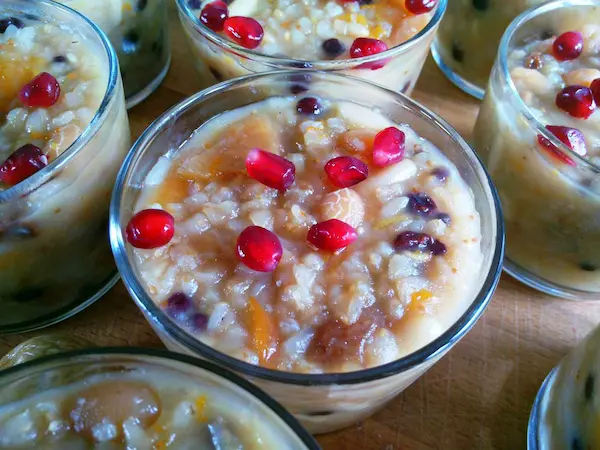
Aşure is a visual celebration. Serve it in clear glass bowls to showcase the layers of fruits and grains.
Traditional Style: Cover the top completely with a mix of ground cinnamon, chopped walnuts, and a mountain of pomegranate seeds.
Modern Twist: Add a few slivers of dried rose petals or a gold leaf for a “Sultan’s Table” aesthetic.
Pairings: Because it is so rich, it pairs best with a strong cup of unsweetened Turkish tea or as a conclusion to a lighter meal like Turkish Style Tomato Soup.
FAQ
Is Aşure vegan? Yes, it is 100% plant-based, making it an excellent choice for modern dietary needs.
Can I make it gluten-free? You can substitute the wheat berries with pearl millet or more rice, though the texture will be less “chewy.”
How long does it stay fresh? It lasts up to 5 days in the fridge. In fact, many believe it tastes better on day two!
Why is my Aşure too thick? You likely didn’t use enough water or boiled it too long. Add warm water and stir gently over low heat to loosen it.
Can I use honey instead of sugar? Absolutely. Add the honey after removing the pot from the heat to preserve its enzymes and delicate flavor.
Masterclass Turkish Aşure (Noah’s Pudding)
Ingredients
- 1 cup Whole Wheat Berries
- ½ cup Chickpeas boiled
- ½ cup White Beans boiled
- ½ cup Rice
- 1 ½ cups Sugar
- 1 cup Mixed Dried Fruits Apricots, Raisins, Figs
- 1 tbsp Orange Zest
- 1 tsp Cinnamon
- ½ tsp Cloves
- 10-12 cups Water
- Garnish: Pomegranate seeds Walnuts, Hazelnuts
Instructions
- Step 1: Blooming the Wheat Grains
- Place the overnight-soaked wheat berries into a large, heavy-bottomed pot with 10 cups of fresh water. Bring to a boil and then lower to a simmer for 45–60 minutes until the grains "bloom" and soften. This step is vital because the wheat must release its natural starches to thicken the pudding into a creamy consistency without the need for artificial thickeners.
- Step 2: The Legume and Rice Fusion
- Incorporate the pre-boiled chickpeas, white beans, and rinsed rice into the pot, stirring gently to combine. By using pre-cooked legumes, you ensure they maintain their structural integrity and "bite" against the softness of the wheat. Continue to simmer for 15 minutes, allowing the different grains to exchange flavors and create a cohesive base.
- Step 3: The Fruit and Sugar Infusion
- Gradually stir in the granulated sugar and orange zest until fully dissolved. Add the raisins and diced dried apricots, allowing them to rehydrate in the hot liquid and release their natural sweetness. The orange zest provides a necessary citrus high note that balances the density of the grains and legumes.
- Step 4: The Fragrant Finish and Setting
- Sprinkle in the ground cinnamon and cloves, then add the diced figs at the very last minute before removing from heat. Adding the figs late prevents their dark pigments from bleeding and discoloring the golden hue of the pudding. Let the Aşure rest for at least 30 minutes; it will thicken into a silky, spoonable dessert as it cools.
Notes
Expert Tips for a 10/10 Aşure
- The "Fig Tip": Always add dried figs at the very last minute. If you boil them with the wheat, their dark color will bleed, turning your beautiful golden pudding into a muddy brown.
- Consistency Control: Aşure thickens as it sits. If your pudding looks like a solid block the next day, simply stir in a splash of warm water or apple juice to restore its creaminess.
- The Orange Factor: Don't skip the orange zest. It cuts through the density of the grains and provides a modern, refreshing high note to the ancient recipe.
- Legume Texture: Ensure your beans and chickpeas are "al dente" before adding them to the main pot so they don't lose their skins during the final simmer.