In Turkish, karnıyarık means “split belly,” a name inspired by the eggplant being opened to hold its filling. This practical baked version keeps the dish rich and juicy without requiring deep frying, making it an approachable main course for a family dinner or a relaxed weekend table.
What Is Karnıyarık?
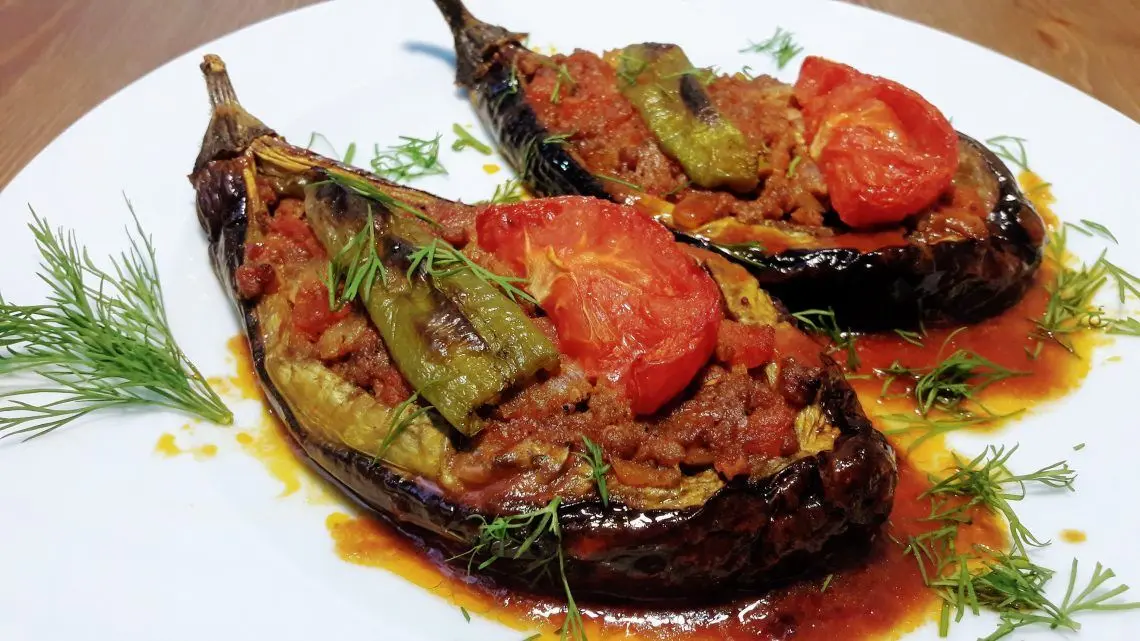
Karnıyarık is a traditional Turkish main dish made with softened whole eggplants filled with sautéed ground beef, onion, tomato and pepper, then baked in a light tomato sauce. Its name means “split belly,” describing the opened eggplant that holds the savoury filling. It is commonly served with rice pilaf and yogurt.
The dish is loved for its balance: silky eggplant, savoury meat filling, sweet cooked onion, gentle tomato acidity and the freshness of parsley or yogurt at the table. Unlike a casserole where everything blends together, each stuffed eggplant is presented as its own generous portion.
If you enjoy Turkish eggplant dishes, it is useful to compare karnıyarık with İmam Bayıldı, its olive oil-based meat-free relative, and Turkish Moussaka, where eggplant and meat are usually served in a more layered or pan-style preparation.
Karnıyarık in Turkish Home Cooking
Karnıyarık is one of those Turkish dishes that belongs as naturally to a family table as it does to a restaurant menu. It is not usually prepared in a hurry: the eggplants need time to soften, the filling needs time to develop flavour, and the finished tray is best allowed to rest briefly before serving.
Eggplant has a particularly important place in Turkish cooking. It may be grilled until smoky, fried for summer dishes, simmered with olive oil or paired with meat in warming main courses. Karnıyarık shows why the vegetable is so valued: once softened, it becomes almost creamy, absorbing the flavour of tomato, onion and beef without losing its shape.
Some versions fry the eggplants before filling them, giving the dish an especially rich, traditional texture. In a modern home kitchen, brushing the eggplants with olive oil and roasting them first produces a lighter result that still becomes wonderfully tender and satisfying.
Why This Recipe Works
- Roasted rather than deep-fried eggplants: You get a soft, silky texture with less oil and easier clean-up.
- Well-balanced filling: Ground beef, onion, pepper and tomato cook down into a juicy mixture that does not flood the eggplants.
- A light tomato baking sauce: It prevents dryness and makes the finished plate perfect for serving with rice.
- Clear substitution options: The recipe works with ground beef, ground lamb or a mixture of both.
- Built for a Turkish-style meal: Serving notes include pilaf, yogurt and cacık rather than treating the eggplant as a stand-alone dish.
Ingredients for Karnıyarık and Why They Matter
This recipe makes four generous portions. Choose eggplants that are similarly sized so they soften at the same rate and look neat when served.
For the Eggplants
- 4 medium eggplants: Long, medium-sized eggplants are easiest to open and fill. Very large eggplants may contain more seeds and take longer to soften.
- 3 tablespoons olive oil: Used to brush the eggplants before roasting, helping the flesh become tender and lightly golden.
- 1/2 teaspoon salt: Seasons the eggplant and helps draw away surface moisture before cooking.
For the Ground Beef Filling
- 225 g ground beef, about 1/2 lb: Use beef with a little fat for a filling that remains juicy. Ground lamb or a beef-lamb mixture may also be used.
- 1 medium onion, finely chopped: Builds sweetness and body in the filling.
- 1 green pepper, finely chopped: Brings the familiar fresh pepper flavour used in many Turkish meat dishes.
- 2 garlic cloves, finely chopped: Adds warmth without overpowering the eggplant.
- 1 large tomato, peeled and diced: Adds moisture and natural acidity to the meat filling.
- 1 tablespoon tomato paste: Concentrates the tomato flavour and helps the filling hold together.
- 1 teaspoon Turkish red pepper paste, optional: Adds deeper pepper flavour and colour; use sweet or mild paste unless you want heat.
- 1/2 teaspoon salt: Seasons the meat filling.
- 1/2 teaspoon black pepper: Gives gentle warmth.
- 1/4 teaspoon ground cumin, optional: Adds a light savoury background note; keep it subtle so the eggplant remains central.
- 2 tablespoons chopped parsley: Stirred in at the end for freshness.
For the Sauce and Garnish
- 1 tablespoon tomato paste: Creates the light baking sauce around the stuffed eggplants.
- 240 ml hot water, about 1 cup: Loosens the sauce so the eggplants finish cooking gently in the oven.
- 1 tomato, sliced into four wedges: A traditional-looking garnish on top of each portion.
- 1 green pepper, cut into four pieces: Roasts on top and adds colour and aroma.
How to Make Karnıyarık Step by Step
Step 1: Prepare the Eggplants
Wash and dry the eggplants. Peel each one lengthwise in alternating strips, leaving some purple skin attached so the eggplant holds its shape while cooking. Make one long slit along the centre of each eggplant, taking care not to cut all the way through.
Sprinkle the eggplants lightly with salt and leave them for 20 minutes. Modern eggplants are not always bitter, but this short resting time seasons them and helps remove surface moisture. Pat them very dry before roasting.
Step 2: Roast the Eggplants Until Soft
Heat the oven to 400°F / 200°C. Place the eggplants in a baking dish or on a lined tray, brush them with olive oil and roast for about 25 to 30 minutes, turning once if needed. They should be softened enough to open gently with a spoon, but not falling apart.
Traditional alternative: The eggplants may be shallow-fried in oil until softened and lightly golden. This creates a richer result, but roasting is more convenient for everyday home cooking.
Step 3: Cook the Savoury Meat Filling
While the eggplants roast, heat a wide skillet over medium heat. Add the ground beef and cook, breaking it apart with a spoon, until it releases its moisture and begins to brown. If the meat is very lean, add a small drizzle of olive oil.
Add the chopped onion and green pepper. Cook for 5 to 6 minutes, until softened. Stir in the garlic, tomato paste and optional pepper paste, then cook for another minute so the pastes lose their raw taste.
Add the diced tomato, salt, black pepper and optional cumin. Cook until the filling is moist but not watery, about 6 to 8 minutes. Remove from the heat and stir in the chopped parsley.
Step 4: Open and Fill the Eggplants
Reduce the oven temperature to 350°F / 180°C. Arrange the softened eggplants snugly in a baking dish with their slits facing upward. Use the back of a spoon to gently widen each opening, creating enough space for the filling without tearing the sides.
Divide the meat mixture between the four eggplants. Spoon it in generously, allowing a little mound of filling to show above each opening.
Step 5: Add the Tomato Sauce and Garnish
Whisk 1 tablespoon tomato paste with 1 cup hot water until smooth. Pour this sauce around the eggplants, not directly over the filling. Top each stuffed eggplant with one piece of tomato and one piece of green pepper.
Step 6: Bake Until Tender and Juicy
Bake for 25 to 30 minutes, until the eggplants are completely tender, the garnish is lightly roasted and the tomato sauce has developed flavour around the edges of the dish. Spoon a little sauce over the eggplants once during baking if the tops appear dry.
Step 7: Rest Before Serving
Remove the dish from the oven and allow it to rest for 10 minutes. This is a small step, but it matters: the eggplant becomes easier to transfer to the plate, and the meat filling settles into the softened flesh rather than sliding out immediately.
A Practical Home Method: Baked Karnıyarık Without Frying
Frying the eggplants first is traditional and delicious, but it also requires more oil and more attention at the stove. For a home-friendly version, roasting is the method I return to most often: brush the striped eggplants with olive oil, bake until easily pressed with a spoon, then stuff and finish them in their tomato sauce.
The key is not to undercook the eggplants in the first stage. If they are still firm when filled, the final dish never develops its characteristic soft, almost silky texture. Let the eggplants soften properly before adding the meat mixture, and the oven will finish the rest gently.
For cooks using very thick or large eggplants, allow an extra 5 to 10 minutes of initial roasting time. The flesh should yield easily before the filling goes in.
Equipment You Will Need
- Medium baking dish: Large enough for four eggplants to sit close together without overlapping.
- Large skillet: For browning the meat and cooking the filling evenly.
- Sharp vegetable peeler or knife: For creating the traditional striped eggplant appearance.
- Wooden spoon: Useful for separating the meat and opening the softened eggplants gently.
- Small bowl or measuring jug: For mixing the tomato baking sauce.
Expert Tips for Tender, Flavourful Karnıyarık
- Choose medium eggplants with firm, shiny skin. They soften evenly and are easier to portion individually.
- Leave some skin on the eggplants. The striped peel is not only decorative; it keeps softened eggplants from collapsing in the baking dish.
- Cook the meat filling until it is moist, not runny. A watery filling will dilute the sauce and make serving messy.
- Use pepper paste sparingly. It adds wonderful Turkish flavour, but too much can overpower the natural sweetness of the eggplant.
- Pour sauce around, not over, the filling. This keeps the top attractive while still allowing the eggplant to absorb flavour.
- Rest the tray for 10 minutes. Karnıyarık serves more neatly and tastes more balanced after a short rest.
Common Mistakes When Making Karnıyarık
Filling Eggplants Before They Are Soft Enough
Eggplants need to be tender before stuffing. If they are only lightly warmed, the finished dish can remain firm in the centre even after baking. Roast or fry them until they can be opened gently with a spoon without resistance.
Using a Filling That Is Too Wet
Tomatoes release liquid as they cook. If the filling is added to the eggplants before that excess moisture reduces, the tray may become watery rather than saucy. Simmer the filling until it looks juicy and cohesive, not loose.
Removing All the Eggplant Skin
Fully peeled eggplants may become too fragile after softening. Leaving alternating strips of skin helps each portion hold its shape and gives karnıyarık its familiar presentation.
Adding Too Much Sauce
Karnıyarık should sit in a little tomato sauce, not swim in soup. One cup of diluted tomato paste is enough for four eggplants, especially because the filling also contains tomato.
Serving Immediately from the Oven
It is tempting to serve the dish as soon as it comes out, but very hot stuffed eggplants can fall apart on transfer. A short rest improves both the appearance and the eating texture.
Serving and Presentation
Karnıyarık is most traditionally enjoyed as a main course with rice pilaf and yogurt. The rice absorbs the tomato sauce, while the cool yogurt balances the soft eggplant and savoury meat filling. For a classic plate, serve one stuffed eggplant per person with a generous spoonful of Turkish Rice Pilaf.
When serving a larger family table, add a fresh chopped salad, crusty bread and a cool yogurt side. A bowl of Turkish Cacık is especially welcome in warm weather because cucumber, yogurt and herbs lighten the richness of the main dish.
Present the eggplants carefully so the filling remains visible. A little parsley scattered at the end and the roasted pepper-and-tomato garnish on top are enough; this is a dish whose beauty comes from its generous, home-cooked character.
Substitutions and Variations
Can I Use Ground Lamb Instead of Beef?
Yes. Ground lamb produces a richer flavour and works beautifully with eggplant. You may also combine half beef and half lamb for a filling with extra depth while keeping the flavour approachable for family meals.
Can I Make It Without Pepper Paste?
Yes. Tomato paste alone creates a delicious filling and sauce. Pepper paste is optional, but when available it adds a deeper Turkish flavour and a gentle sweetness. Use mild pepper paste unless you intentionally want a hot dish.
Can I Prepare a Vegetarian Version?
For the classic meat-free relative of karnıyarık, prepare İmam Bayıldı rather than simply omitting the beef. Its generous onion-and-tomato filling and olive oil cooking style have their own identity and are worth treating as a distinct Turkish dish.
Nutrition and Portion Guidance
This recipe makes 4 servings, with one filled eggplant per person. Using the baked eggplant method and the amounts listed here, each serving is approximately 320 calories, before adding rice, bread or yogurt. Actual nutrition will change according to the fat content of the meat and the amount of oil absorbed by the eggplants.
For a lighter plate, serve karnıyarık with a generous salad and plain yogurt. For a complete traditional-style dinner, pair it with rice pilaf and cacık, accepting that this is meant to be a comforting main dish rather than a minimal one.
Storage and Reheating
Allow leftover karnıyarık to cool, then store it in an airtight container in the refrigerator for up to 3 days. Keep any rice or yogurt accompaniments in separate containers.
For the best reheated texture, place the stuffed eggplants in a small baking dish with a spoonful of their sauce, cover loosely with foil and warm at 325°F / 165°C until hot throughout, about 15 to 20 minutes. The microwave works when time is limited, but the eggplant may become softer and the filling less evenly heated.
Karnıyarık can be frozen after cooking for up to 2 months. Freeze portions in their sauce, thaw overnight in the refrigerator and reheat in the oven. The flavour remains good, although thawed eggplant will be softer than freshly prepared eggplant.
Kitchen Notes
- The name matters: Karnıyarık means “split belly,” referring to the filled opening in the eggplant.
- Do not confuse it with İmam Bayıldı: Karnıyarık contains minced meat; İmam Bayıldı is prepared without meat and leans more fully into olive oil cooking.
- Roasting is the practical home method: Frying is traditional, but roasting gives a tender result with less oil and less hands-on work.
- Choose the right eggplant: Medium, firm eggplants are easier to soften and plate than oversized ones.
- Make it ahead: The meat filling can be prepared one day in advance and refrigerated, then used to fill freshly softened eggplants before baking.
Frequently Asked Questions About Karnıyarık
What does karnıyarık mean in Turkish?
Karnıyarık literally translates as “split belly.” The name describes the way a whole eggplant is softened, opened lengthwise through the centre and generously filled with a cooked meat mixture. It is a memorable name for a very familiar Turkish home dish, usually served as an individual stuffed eggplant portion.
What is the difference between karnıyarık and İmam Bayıldı?
The clearest difference is the filling. Karnıyarık contains ground meat, usually beef or sometimes lamb, and is served warm as a substantial main course. İmam Bayıldı is meat-free, prepared with onion, tomato, garlic and olive oil, and is often served at room temperature as an olive oil dish.
Do I have to fry the eggplants for authentic karnıyarık?
Frying softened eggplants is a traditional and richly flavoured method, but it is not the only way to prepare a satisfying home version. Roasting eggplants brushed with olive oil produces tender flesh, preserves the stuffed shape and makes the recipe easier and lighter for cooks who prefer not to fry.
Why are my eggplants still firm after baking?
The eggplants were probably not softened enough before being filled. The first cooking stage is essential: they should yield easily when pressed and open gently with a spoon. Very large eggplants also take longer to roast, so allow additional time before adding the meat filling and tomato sauce.
Can I make karnıyarık with ground lamb?
Yes. Ground lamb is a delicious alternative to beef and pairs especially well with eggplant, tomato and pepper. It produces a richer and slightly more distinctive flavour. For a balanced version, many home cooks may enjoy a half-beef, half-lamb mixture, especially when serving the dish with rice and yogurt.
What should I serve with karnıyarık?
Rice pilaf and plain yogurt are the most natural companions because they balance the soft eggplant, meat filling and tomato sauce. Cacık, bread or a simple shepherd-style salad may also be served. Since karnıyarık is already a rich main dish, fresh and cooling sides work particularly well.
Can I prepare karnıyarık ahead of time?
Yes. You can roast the eggplants and prepare the meat filling earlier in the day, then stuff and bake them shortly before serving. Alternatively, fully cooked karnıyarık can be refrigerated and gently reheated the next day. Add fresh parsley after reheating so the finished plate tastes brighter.
Can I freeze cooked karnıyarık?
Cooked karnıyarık can be frozen in its sauce for up to two months. Thaw it overnight in the refrigerator and reheat gently in a covered baking dish. The flavour holds up well, but the eggplant will become softer after freezing, so freshly cooked karnıyarık remains the best presentation.
Make This Turkish Classic at Home
Karnıyarık is the kind of dish that explains Turkish home cooking better than a complicated description ever could. A few everyday ingredients—eggplant, onion, tomato and minced meat—become something warm, generous and quietly special when cooked with patience.
Serve it with rice pilaf and cool yogurt, spoon a little tomato sauce around the plate, and bring it to the table while the eggplant is still tender and warm. It is a meal made for sharing, and one that deserves a permanent place in a Turkish recipe collection.
Authentic Turkish Karnıyarık (Stuffed Eggplant)
Ingredients
- 4 Medium Eggplants
- ½ lb Ground Beef 20% fat
- 1 Large Onion diced
- 2 Cloves Garlic minced
- 2 Tomatoes diced
- 2 Green Peppers sliced
- 2 tbsp Tomato Paste
- 1 tbsp Pepper Paste optional
- 3 tbsp Olive oil
- 1 tsp Salt
- 1 tsp Black pepper
- ½ tsp Cumin
- Fresh parsley for garnish
Instructions
- Prepare Eggplants: Peel eggplants in zebra stripes. Cut a slit lengthwise. Salt for 20 mins, then rinse and pat completely dry.
- Pre-cook: Lightly fry eggplants in olive oil until soft and golden. Alternatively, bake at 400 ℉ for 20 mins.
- Make Filling: Sauté onions and peppers. Add ground meat and brown. Stir in garlic, half the tomato paste, and tomatoes. Simmer for 10 mins.
- Stuff: Place eggplants in a dish. Open the slits and fill generously with the meat mixture.
- Bake: Mix remaining tomato paste with 1 cup water. Pour into the dish. Bake at (350 ℉ - 180℃ ) for 40 minutes.
- Serve: Garnish with parsley and serve with rice pilaf and yogurt.
Notes
Expert Tips for Professional Results
- The Zebra Peel: Peeling in stripes isn't just for looks. The remaining skin provides structural integrity so the eggplant doesn't fall apart, while the peeled sections allow the sauce to soak in.
- Tomato Quality: If tomatoes are out of season, use high-quality canned crushed tomatoes. The natural acidity of the tomato is what balances the richness of the fried eggplant.
- The Sugar Pinch: Add a tiny pinch of sugar to your tomato sauce base. This is an old Ottoman trick to balance the acidity and enhance the natural sweetness of the eggplant.
- Resting Time: Like a good steak, Karnıyarık needs to rest for 10 minutes after leaving the oven. This allows the juices to redistribute, making the dish much easier to serve without it falling apart.