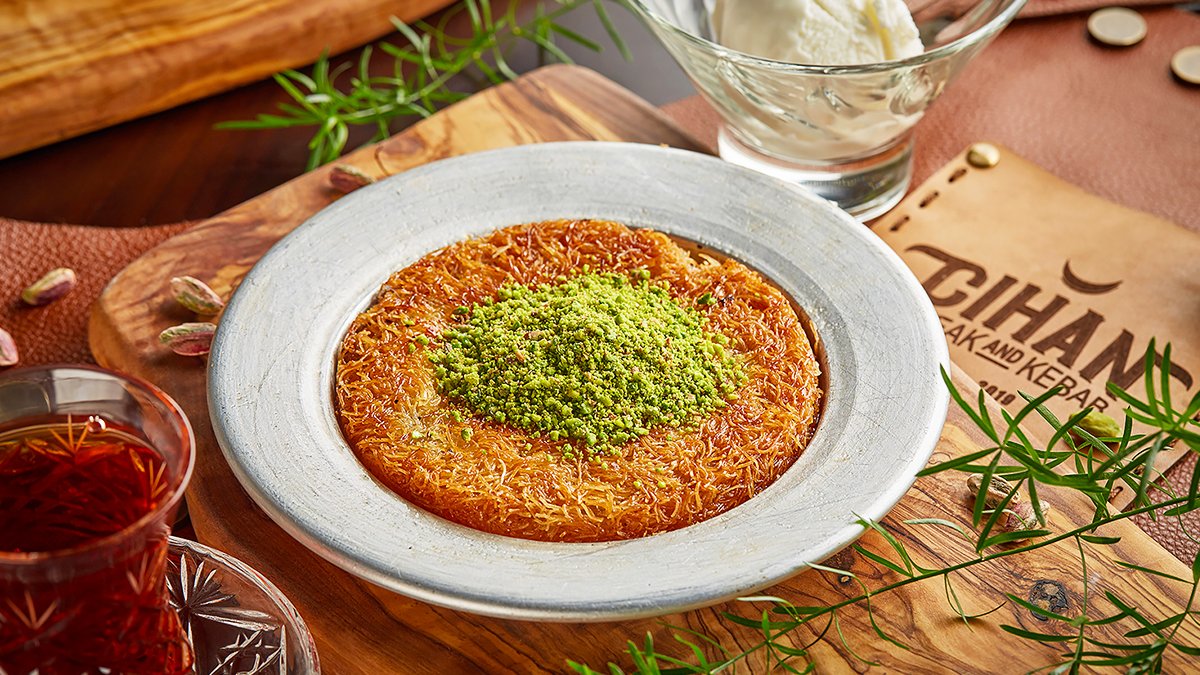
Antakya Künefesi is one of the most iconic desserts of Hatay, a city in southern Turkey famous for its layered food culture, old trade routes, and rich dessert traditions. This golden, crispy, cheese-filled dessert is not just a sweet treat — it is a warm table ritual served fresh, shared immediately, and remembered for its stretchy cheese and buttery kadayıf texture.
As one of the most distinctive dishes in Turkish desserts, Antakya Künefesi combines shredded kadayıf pastry, unsalted künefe cheese, melted butter, and warm sugar syrup. Unlike cold or creamy desserts, künefe must be served hot so the cheese stays soft, elastic, and deliciously stretchy.
Antakya Künefesi is a traditional Turkish cheese dessert made with thin shredded kadayıf, unsalted künefe cheese, butter, and light sugar syrup. The kadayıf is pressed into a shallow tray, filled with cheese, cooked until golden on both sides, then soaked with warm syrup and served hot.
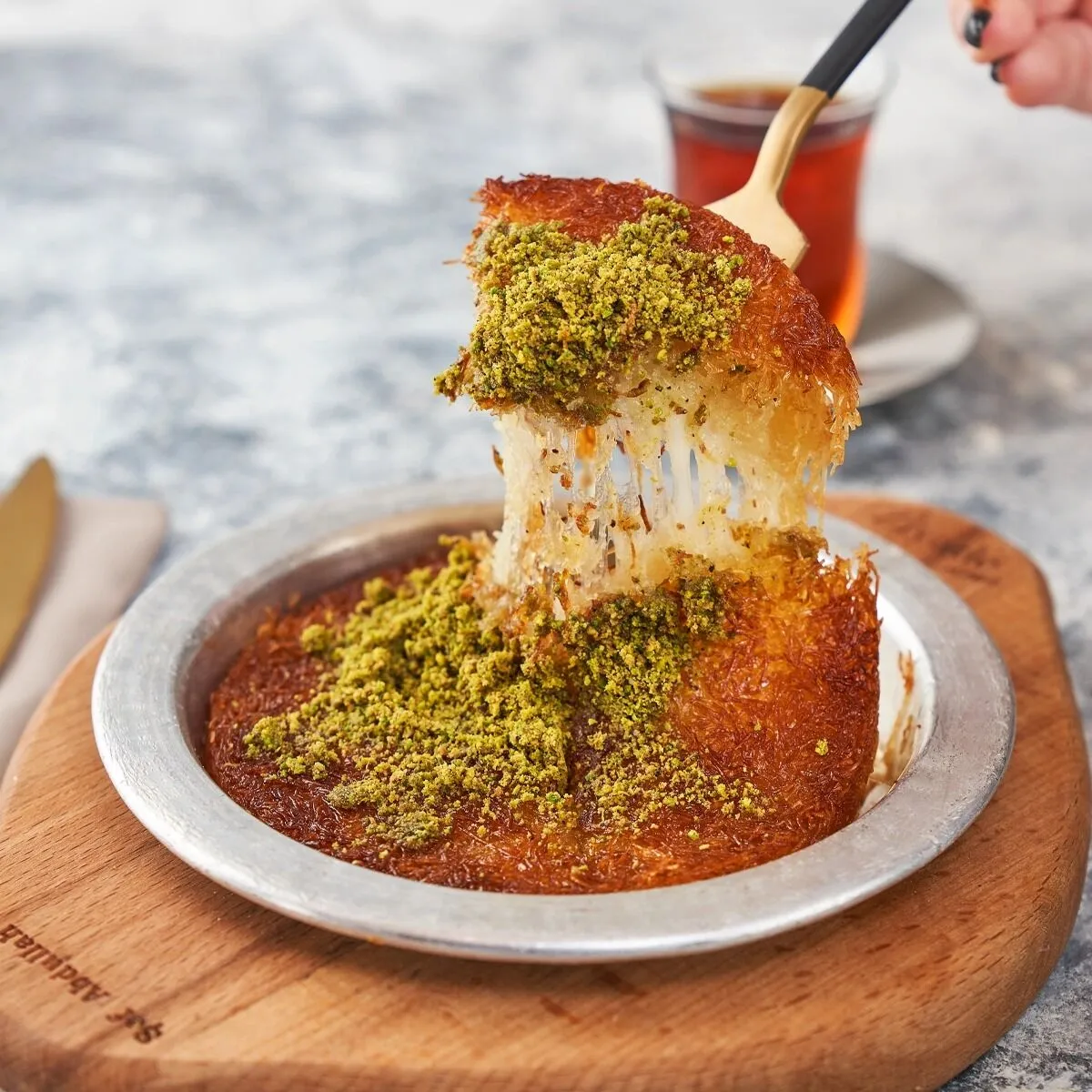
What makes this dessert special is balance. The outside should be crispy and buttery, the inside should be soft and stretchy, and the syrup should sweeten the künefe without making it heavy or soggy. A good Antakya Künefesi is thin, golden, warm, and full of contrast.
If you enjoy traditional syrup desserts, you may also like Turkish Baklava for a layered pastry classic or Şekerpare for a softer semolina-based Turkish dessert.
Why Antakya Künefesi Is One of Turkey’s Most Special Desserts
Antakya Künefesi stands apart from many Turkish desserts because it contains cheese. While most syrup desserts focus on dough, nuts, or semolina, künefe depends on the meeting of crispy kadayıf and soft unsalted cheese. This contrast gives the dessert its signature texture.
The dessert is closely connected to Antakya and Hatay cuisine. Hatay has long been known as a meeting point of Anatolian, Middle Eastern, and Mediterranean food traditions. Künefe reflects that cultural richness with simple ingredients, careful technique, and a strong sense of hospitality.
Authentic Antakya Künefesi is traditionally cooked in a shallow round tray. The kadayıf is buttered, pressed firmly, filled with cheese, cooked until golden, flipped carefully, and finished with syrup. It is served hot, often with crushed pistachios on top.
Ingredients for Authentic Antakya Künefesi
This authentic Antakya Künefesi recipe uses simple ingredients, but each one has an important job. The kadayıf creates crispiness, the cheese gives stretch, the butter adds aroma, and the syrup brings sweetness.
For the Künefe
- 300 g fresh shredded kadayıf – creates the thin, crispy pastry layers
- 150 g unsalted künefe cheese – gives the dessert its soft, stretchy center
- 100 g unsalted butter, melted – adds flavor and helps the kadayıf turn golden
- 1 tbsp extra butter – used to grease the künefe pan before cooking
- 2 tbsp finely ground pistachios – for topping before serving
For the Syrup
- 1 cup sugar – gives the dessert its classic sweetness
- 1 cup water – balances the syrup consistency
- 1 tsp lemon juice – prevents the syrup from crystallizing
If you cannot find traditional künefe cheese, use a mild unsalted melting cheese such as fresh mozzarella as a home substitute. The flavor will not be exactly the same, but it can still give a soft and stretchy result.
For another lighter milk-based Turkish dessert, try Turkish Rice Pudding. It is softer, creamier, and served chilled, making it a good contrast to hot künefe.
How to Make Antakya Künefesi Step-by-Step
This Antakya Künefesi recipe depends on three key details: the syrup must be ready before cooking, the kadayıf must be well buttered, and the dessert must be served hot. Follow each step carefully for a crisp outside and stretchy cheese center.
Step 1: Prepare the Syrup First
Add sugar and water to a small saucepan. Stir once, then bring it to a boil over medium heat. When it starts boiling, reduce the heat and simmer for 8–10 minutes until slightly thicker.
Add lemon juice during the last minute, then remove the syrup from the heat. Let it become warm, not boiling hot. This is important because very hot syrup can make the künefe too soft and soggy.
Step 2: Separate the Kadayıf Strands
Place the shredded kadayıf in a large bowl. Gently pull the strands apart with your fingers so there are no large clumps. Shorter, evenly separated strands are easier to press into the pan and give a better texture.
If the kadayıf strands are too long, roughly chop them with a knife. Do not turn them into tiny pieces; they should still look like thin pastry threads.
Step 3: Mix Kadayıf with Butter
Pour the melted butter over the kadayıf. Rub the butter into the strands using your fingertips until every piece is lightly coated. This step is essential for even browning and crispiness.
Do not pour all the butter into one spot and leave dry parts behind. Dry kadayıf burns quickly and tastes rough, while evenly buttered kadayıf becomes golden and crisp.
Step 4: Grease and Fill the Pan
Grease a small round künefe pan or non-stick skillet with butter. Spread half of the buttered kadayıf into the pan. Press it firmly with your hand, a spatula, or the bottom of a glass.
Pressing is very important. If the bottom layer is loose, the künefe can fall apart when flipping. A compact layer also creates the classic thin and crispy Antakya-style texture.
Step 5: Add the Cheese Layer
Slice or crumble the unsalted künefe cheese and spread it evenly over the kadayıf layer. Keep the cheese away from the edges so it does not leak out and burn while cooking.
The cheese layer should be even but not too thick. Too much cheese can make the künefe heavy and difficult to flip. The goal is a balanced bite: crispy pastry outside, soft cheese inside.
Step 6: Add the Top Kadayıf Layer
Cover the cheese with the remaining buttered kadayıf. Spread it evenly and press again firmly. The top and bottom layers should hold the cheese inside like a thin pastry shell.
Check the edges and gently tuck in any loose strands. A clean edge helps the künefe cook evenly and makes flipping easier.
Step 7: Cook the First Side Slowly
Place the pan over low to medium-low heat. Cook slowly for 6–8 minutes, rotating the pan occasionally so the bottom browns evenly. Do not rush this step with high heat.
The bottom should become golden and crisp before flipping. If the heat is too high, the outside will burn while the cheese inside remains cold.
Step 8: Flip the Künefe Carefully
Place a flat plate over the pan. Hold the plate and pan together firmly, then flip the künefe onto the plate. Slide it back into the pan so the uncooked side is now at the bottom.
If flipping feels difficult, use two small pans of the same size or a wide spatula. The key is to keep the künefe compact and avoid breaking the layers.
Step 9: Cook the Second Side
Cook the second side for another 5–7 minutes over low to medium-low heat. The cheese should melt fully, and both sides should be golden, crisp, and fragrant.
You can gently press the top with a spatula while cooking. This helps the layers stay compact and gives a better restaurant-style finish.
Step 10: Add Warm Syrup and Serve
Once both sides are golden, remove the künefe from the heat. Pour the warm syrup evenly over the hot künefe. Let it rest for 1–2 minutes so the syrup settles without making the pastry soggy.
Top with finely ground pistachios and serve immediately. Antakya Künefesi should be eaten hot, while the kadayıf is still crisp and the cheese is still stretchy.
Nutrition Facts (Per Serving)
- Calories: ~390 kcal
- Protein: 9 g
- Fat: 20 g
- Carbohydrates: 45 g
- Sugar: 28 g
- Sodium: Low to moderate, depending on the cheese
Antakya Künefesi is a rich dessert made with butter, cheese, kadayıf, and syrup. It is best enjoyed fresh and in moderate portions.
Tips & Tricks
- Use unsalted cheese – salty cheese will ruin the balance of the dessert.
- Prepare the syrup first – warm syrup should meet hot künefe for the best texture.
- Butter the kadayıf evenly – dry spots burn, while buttered strands become golden and crisp.
- Press the layers firmly – compact layers help the künefe hold together when flipped.
- Cook over low heat – slow cooking melts the cheese and browns the kadayıf evenly.
- Keep cheese away from the edges – this prevents leaking and burning.
- Serve immediately – künefe loses its stretch and crispiness as it cools.
Serving & Presentation
Antakya Künefesi is served hot, usually straight from the pan or transferred carefully to a serving plate. The surface should be golden, glossy with syrup, and topped with crushed pistachios.
- Serve with Turkish tea for a classic pairing
- Add ground pistachios for color and texture
- Serve with kaymak or ice cream for a richer dessert plate
- Cut into wedges while hot
- Eat immediately while the cheese is still stretchy
For a complete Turkish dessert table, serve Antakya Künefesi with homemade Turkish Baklava, Sütlaç, and Şekerpare. This creates a balanced selection of crispy, creamy, and syrup-soaked desserts.
Storage & Reheating
Antakya Künefesi is best eaten fresh, but leftovers can be stored in an airtight container in the refrigerator for up to 2 days. Keep in mind that the kadayıf will soften after absorbing syrup.
To reheat, place the künefe in a non-stick pan over low heat for a few minutes until warm. This helps revive some crispiness. Avoid long microwave reheating because it softens the kadayıf and can make the cheese rubbery.
If you want to prepare ahead, assemble the künefe without cooking or adding syrup. Cover and refrigerate for a few hours, then cook fresh before serving.
FAQ
❓ What is Antakya Künefesi made of?
Antakya Künefesi is made with shredded kadayıf pastry, unsalted künefe cheese, butter, sugar syrup, and pistachios for topping. The kadayıf is layered around the cheese, cooked until golden and crisp, then finished with warm syrup while still hot.
❓ What cheese is used for Antakya Künefesi?
Traditional Antakya Künefesi uses unsalted künefe cheese, a mild cheese that melts well and creates the famous stretchy texture. If you cannot find it, fresh unsalted mozzarella can be used as a home substitute, although the flavor will be less traditional.
❓ Why is my künefe not crispy?
Künefe may become soft if the kadayıf is not buttered evenly, the pan is overcrowded, the heat is too low for too long, or too much syrup is added. Press the layers firmly, cook until golden, and use warm syrup in a controlled amount.
❓ Should syrup be hot or cold for künefe?
For the best texture, the künefe should be hot and the syrup should be warm. Very hot syrup can make the kadayıf soggy, while cold syrup may not absorb evenly. Warm syrup gives sweetness without destroying the crispy pastry texture.
❓ Can I make Antakya Künefesi without a special pan?
Yes, you can use a small non-stick skillet instead of a traditional künefe pan. Choose a shallow pan and keep the künefe thin. A smaller pan makes flipping easier and helps the kadayıf cook evenly on both sides.
❓ Can künefe be made ahead of time?
Künefe is best cooked fresh, but you can assemble it a few hours ahead without syrup. Keep it covered in the refrigerator, then cook and add syrup just before serving. This keeps the kadayıf crisp and the cheese stretchy.
❓ Why does the cheese leak out of my künefe?
Cheese usually leaks when it is spread too close to the edges or when the kadayıf layers are not pressed firmly. Keep the cheese slightly away from the border and seal it with compact kadayıf layers before cooking.
❓ Is Antakya Künefesi very sweet?
Antakya Künefesi is a syrup dessert, but it should not be painfully sweet. A good künefe has balance: crispy buttery kadayıf, mild cheese, and enough syrup to sweeten without making it heavy. You can reduce the syrup slightly for a lighter version.
❓ Can I bake künefe in the oven?
Yes, künefe can be baked in the oven at 190°C until golden, but pan-cooking gives better control and a more traditional texture. If baking, use a well-buttered shallow tray and watch carefully so the top does not dry out before the cheese melts.
❓ How do I keep künefe cheese stretchy?
Use a fresh unsalted melting cheese and serve the künefe immediately after cooking. If the dessert cools, the cheese becomes firm and loses its stretch. Reheating gently in a pan can help, but freshly cooked künefe gives the best result.
❓ What is the difference between künefe and baklava?
Künefe is made with shredded kadayıf and cheese, while baklava is made with thin phyllo layers and nuts. Künefe is served hot with stretchy cheese, whereas baklava is usually served at room temperature and has a layered, nut-filled texture.
Closing Thoughts
Antakya Künefesi is not just a dessert — it is a warm, crispy, cheese-filled symbol of Hatay’s food culture. Its beauty comes from contrast: buttery kadayıf, soft melted cheese, light syrup, and the final touch of pistachio.
If you want to experience Turkish desserts at their most memorable, Antakya Künefesi deserves a special place on your table. Serve it hot, keep the layers thin, use the right cheese, and enjoy it while the center is still perfectly stretchy.
Antakya Künefesi Recipe
Ingredients
For the Künefe
- 300 g fresh shredded kadayıf – creates the thin crispy pastry layers
- 150 g unsalted künefe cheese – gives the dessert its soft stretchy center
- 100 g unsalted butter melted – adds flavor and helps the kadayıf turn golden
- 1 tbsp extra butter – used to grease the künefe pan before cooking
- 2 tbsp finely ground pistachios – for topping before serving
For the Syrup
- 1 cup sugar – gives the dessert its classic sweetness
- 1 cup water – balances the syrup consistency
- 1 tsp lemon juice – prevents the syrup from crystallizing
Instructions
- Prepare the syrup first.
- Add the sugar and water to a small saucepan. Stir once to combine, then place the pan over medium heat. Bring the mixture to a gentle boil. Once it starts boiling, reduce the heat and simmer for 8 to 10 minutes.
- Add the lemon juice during the final minute of cooking. Remove the syrup from the heat and let it cool until warm. The syrup should not be boiling hot when poured over the künefe, because very hot syrup can make the kadayıf soft and soggy.
- Separate the kadayıf strands.
- Place the shredded kadayıf pastry in a large mixing bowl. Gently pull the strands apart with your fingers to remove clumps. If the strands are very long, roughly chop them with a knife or kitchen scissors.
- Do not cut the kadayıf too finely. The strands should remain visible so they can create the traditional crispy texture of Antakya Künefesi.
- Mix the kadayıf with melted butter.
- Pour the melted butter over the kadayıf. Rub the butter into the pastry using your fingertips until all strands are lightly and evenly coated.
- This step is very important. Evenly buttered kadayıf turns golden and crisp during cooking. Dry areas may burn, while overly wet areas can become heavy and greasy.
- Grease the pan.
- Spread 1 tablespoon of butter over the bottom and sides of a small round künefe pan or non-stick skillet. Use a pan that is not too large, because Antakya Künefesi should be thin but compact.
- A well-greased pan helps the bottom layer become crisp and makes flipping easier.
- Create the first kadayıf layer.
- Add half of the buttered kadayıf to the pan. Spread it evenly across the bottom. Press it down firmly using your hand, a spatula, or the bottom of a glass.
- The bottom layer must be compact. If it is too loose, the künefe may break when flipped and the cheese may leak out while cooking.
- Add the cheese layer.
- Slice, grate, or crumble the unsalted künefe cheese. Spread it evenly over the pressed kadayıf layer.
- Keep the cheese slightly away from the edges. This prevents the cheese from leaking out and burning during cooking. The cheese layer should be even but not too thick.
- Cover with the second kadayıf layer.
- Add the remaining buttered kadayıf over the cheese. Spread it evenly and press firmly again. Make sure the cheese is fully covered.
- Tuck in loose strands around the edges. A clean and compact edge helps the künefe hold its shape and cook evenly.
- Cook the first side slowly.
- Place the pan over low to medium-low heat. Cook for 6 to 8 minutes, rotating the pan occasionally so the bottom browns evenly.
- Do not use high heat. High heat can burn the outside before the cheese melts. The goal is a golden, crisp bottom and a warm, soft cheese center.
- Flip the künefe carefully.
- Place a flat plate over the pan. Hold the plate and pan tightly together, then flip the künefe onto the plate in one confident movement.
- Slide the künefe back into the pan so the uncooked side is now touching the pan. If needed, add a very small amount of butter before placing it back.
- Cook the second side.
- Cook the second side for 5 to 7 minutes over low to medium-low heat. Rotate the pan again for even browning.
- The künefe is ready when both sides are golden and crisp, and the cheese inside is fully melted.
- Add the warm syrup.
- Remove the pan from the heat. Pour the warm syrup evenly over the hot künefe. Add it slowly so the kadayıf absorbs the syrup without becoming too soft.
- Let the künefe rest for 1 to 2 minutes. This short rest helps the syrup settle while keeping the pastry crisp.
- Garnish and serve immediately.
- Sprinkle finely ground pistachios over the top. Slice and serve the künefe while it is still hot.
- Antakya Künefesi should be eaten immediately, while the kadayıf is crispy and the cheese is still soft and stretchy.